Introduction
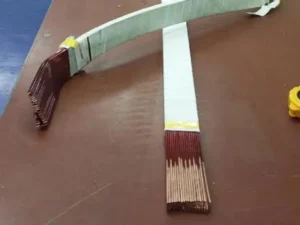
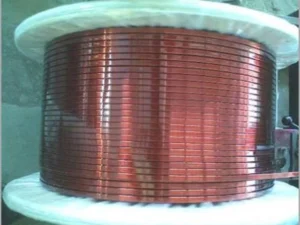
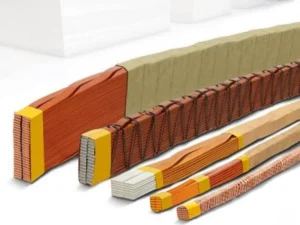
High-precision flat and profile wires play a critical role in industries such as electronics, automotive, aerospace, and medical devices. Small variations in dimensions, surface quality, or mechanical properties can compromise performance and lead to costly rework. Therefore, optimizing the wire drawing process is essential for producing consistent, high-quality wire while maximizing production efficiency and reducing scrap.
This blog explores practical strategies, technical considerations, and tips for optimizing wire drawing for flat and profile wires.
Material-Centric Process Design
Material properties dictate drawing parameters, with work hardening, ductility, and thermal sensitivity as core considerations:
- Copper & Alloys: High ductility but prone to oxidation and scratches. Use clean dies (Ra ≤ 0.02 μm), hydrodynamic lubrication, and targeted annealing (180℃, 30 mins) to preserve conductivity and strength.
- Aluminum: Soft and lightweight—control tension (±5% variation) to avoid edge deformation and use water-based lubricants with anti-oxidation additives.
- Stainless Steel (304/316): Work-hardens rapidly; schedule intermediate annealing (1050–1100℃, inert gas) after 40–50% cumulative reduction to restore ductility.
- High-Strength Alloys (Nickel, Titanium): Low thermal conductivity and high yield strength demand slow speeds (≤8 m/min), multi-pass reduction (8–12% per pass), and in-line cooling to prevent micro-cracks.
Tip: Conduct pre-production testing to understand your material’s behavior under different drawing reductions, speeds, and lubricants. This can save significant downtime in full production.
Die Design for Precision Shaping
Die geometry and material directly impact dimensional accuracy and surface finish:
- Flat Wire Dies: Tapered entry angles (12–18°) and chamfered edges (R=0.1–0.3 mm) ensure uniform width reduction and prevent edge cracking.
- Profile Wire Dies: Multi-stage sequences with incremental shape refinement reduce stress and maintain cross-sectional precision.
- Die Materials: Tungsten carbide for durability; diamond coatings (2–5 μm) for ultra-precise, wear-resistant applications.
- Angle Optimization: 8–15° entry angles balance drawing force and surface quality, minimizing redundant deformation.
Lubrication: Tribology & Heat Control
Effective lubrication reduces friction, dissipates heat, and protects wire/die surfaces:
| Lubrication Aspect | Requirements | Recommendations |
| Lubricant Selection | Material compatibility, heat dissipation | Oil-based (200–400 cSt) for high-strength alloys; water-based (EP additives) for copper/aluminum |
| Application Method | Uniform coverage, adhesion | Automatic precision nozzles; electrostatic lubrication for high-speed drawing (>20 m/min) |
| Maintenance | Contamination control, performance stability | 1 μm absolute filtration; monitor viscosity/acidity to prevent die wear |
Process Parameter Precision
Stable control of key parameters is non-negotiable for consistency:
| Parameter | Control Targets | Material-Specific Calibrations |
| Tension | Avoid distortion, consistent force | Closed-loop systems (±0.1 N accuracy), 3–8% of yield strength |
| Drawing Speed | Prevent overheating, efficiency | Copper (15–25 m/min); stainless steel (5–12 m/min); titanium (3–8 m/min) |
| Temperature | Limit thermal damage | Die exit temp ( alloys); infrared sensors + in-line cooling |
| Reduction Ratios | Minimize stress, dimensional stability | Gradient strategy: 15–20% (initial passes), 8–12% (final passes); ≤5% for ≤0.2 mm thickness |
Intermediate Annealing and Stress Relief
For high-precision profile wires, stress accumulation during drawing can lead to warping, dimensional inconsistencies, or reduced mechanical stability—critical concerns for applications like automotive components or medical devices. Plan intermediate annealing steps tailored to material type and total reduction ratio: ductile metals (copper, aluminum) may require annealing after 30-40% cumulative reduction, while hard alloys (stainless steel, titanium) need more frequent treatment (every 15-20% reduction) to counter work hardening. To ensure effectiveness, monitor residual stress using non-destructive techniques like X-ray diffraction or targeted mechanical testing (e.g., bending fatigue trials), adjusting annealing temperature (typically 600-1100°C) and hold time to achieve optimal stress relief without compromising wire precision.
Surface Quality Considerations
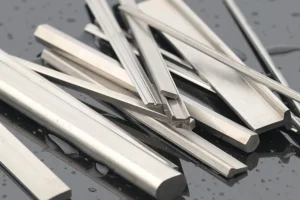
Flat and profile wires typically demand high-quality, flawless surface finish for subsequent processing and end-use performance.
- Conduct regular visual and dimensional inspection to check for scratches, edge cracks, burrs and other surface imperfections.
- Apply post-drawing surface polishing or protective coating treatment when needed to improve surface smoothness and corrosion resistance.
Conclusion
Optimizing wire drawing for high – precision flat and profile wires demands a holistic approach that integrates material – specific process planning, precision die design, effective lubrication, and meticulous control of drawing parameters. By carefully managing intermediate annealing, stress relief, and surface quality, manufacturers can attain consistent dimensional accuracy, superior surface finish, and reliable mechanical properties. Implementing these optimization strategies not only boosts production efficiency but also minimizes scrap, guaranteeing that every batch of wire meets stringent industry standards. With a systematic focus on these core elements, high – precision flat and profile wire production can be elevated from routine manufacturing to a benchmark of quality and performance.
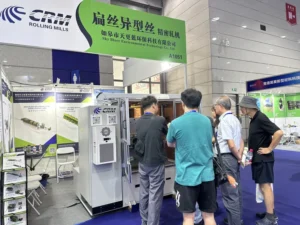
The machinery of Sky Bluer Environmental Technology Co., Ltd. can fully meet the aforementioned drawing process. Additionally, we offer customized services to ensure our equipment perfectly adapts to your production requirements. Contact Sky Bluer Environmental Technology today to explore customized solutions for your high – precision wire production needs!