Introduction
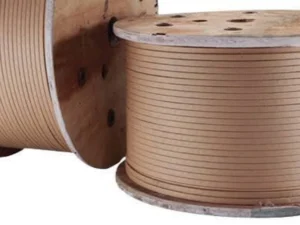
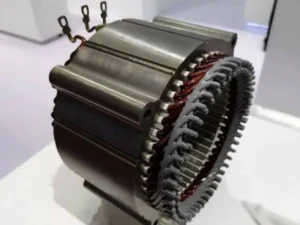
Triangle shaped wire, also known as wedge wire , shares these robust structural characteristics. Its shape distributes force and tension uniformly across all three sides and internal angles. This makes it more resistant to bending and deformation. The wire is a precision-engineered metal product widely used in water treatment filters, industrial screening, and mineral separation. Its performance is highly dependent on the accuracy of its cross-sectional shape, which directly affects filtration efficiency, wear resistance, and structural integrity. This blog explores the complete manufacturing journey—from raw material selection to final quality testing—highlighting the wedge wire rolling process that ensures consistent, high-performance outputs.
By understanding the production process and key parameters, manufacturers and end-users can appreciate the critical role of precision forming and post-processing treatments in creating reliable triangle wire products.
Understanding Triangle Wire
Triangle wire is a type of metal wire with a triangular or wedge-shaped cross-section. This shape enables precise spacing and optimal open area, making it ideal for filtration and separation applications.
Common materials include:
Stainless steel (304, 316, 316L)
Carbon steel
Specialized alloys for corrosion or wear resistance
Key performance indicators:
- Dimensional accuracy: Uniform width and thickness are essential for proper stacking and filter efficiency.
- Surface finish: Smooth surfaces reduce clogging and improve flow.
- Strength and wear resistance: High tensile strength ensures durability under mechanical stress and harsh environments.
Raw Materials and Preparation
Selecting high-quality raw wire is critical for producing triangle/wedge wire with consistent performance. Key specifications for materials, dimensions, and tolerances are summarized below:
| Parameter | Incoming Wire (Raw) | Outgoing Wire (Finished Triangle/Wedge Wire) | Notes |
| Diameter | ±0.02 mm | ±0.01 mm | Ensures uniform rolling and minimal variation in wedge dimensions |
| Hardness | HRC 15–25 (steel) | HRC 20–30 | Depends on material and required wear resistance |
| Ductility | ≥25% elongation | Maintained after rolling | Prevents cracks or edge chipping |
| Chemical Composition | Specified alloy grade (e.g., 304, 316 stainless steel) | Same as raw | Consistency critical for corrosion resistance and strength |
| Surface Condition | Smooth, oxide-free | Smooth, polished or passivated | Acid pickling or cleaning removes scale and oxides |
| Edge Precision | N/A | ±0.02 mm | Ensures proper stacking and open area in filters |
Pre-processing steps include:
- Acid pickling or cleaning: Removes surface oxides and contaminants
- Annealing: Improves ductility for rolling and prevents cracking
- Surface inspection: Detects scratches, dents, or other defects
Meeting these standards before rolling reduces scrap rates, improves downstream forming consistency, and ensures high-quality triangle/wedge wire for demanding industrial applications.
Wedge Wire Rolling Process
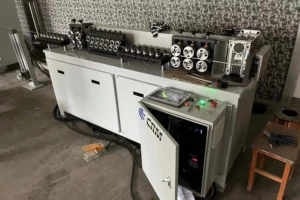
The wedge wire rolling process transforms round wire into precision triangle or wedge-shaped profiles through a series of carefully controlled mechanical steps. The process requires advanced rolling equipment and precise parameter control to ensure consistent dimensional accuracy, surface finish, and mechanical performance.
Rolling Machine Types and Working Principle
Wedge wire rolling machines are specialized multi-roll systems that gradually shape raw wire into a wedge profile. Common types include:
- Two-roll wedge wire rolling machines: Suitable for smaller wires or prototype production, offering simpler setup and cost efficiency.
- Four-roll or multi-roll systems: Standard for industrial-scale production, providing higher precision and smoother surface finish.
- Integrated automatic systems: Include wire feeding, rolling, edge trimming, and output collection for high-efficiency production.
Working principle:
The raw wire passes through a series of progressively shaped rolls. Each roll set applies controlled pressure to reduce material thickness, gradually forming a precise triangular cross-section while maintaining surface integrity.
Rolling Steps
Initial Forming:
- The wire enters the first roll set, which begins the shaping process by converting the circular wire into a rough triangular or wedge profile.
- This step ensures material distribution along the width of the triangle and avoids severe deformation that can cause cracks.
Intermediate Rolling:
- The wire passes through intermediate roll sets that refine the triangular shape.
- Thickness, width, and wedge angle are progressively adjusted to meet dimensional tolerances.
- Lubrication may be applied to reduce friction and prevent surface scratches.
Final Rolling and Sizing:
- The finishing rolls ensure the final cross-section is uniform along the entire wire length.
- Precision roll spacing and pressure adjustments guarantee the wedge maintains its sharp edges without burrs.
- This stage often includes integrated cutting or coiling for final product collection
Typical Process Parameters
| Parameter | Typical Range | Purpose |
| Roll Pressure | 50–250 MPa | Controls material flow and prevents cracks |
| Roll Spacing | 0.05–0.2 mm tolerance | Ensures accurate wedge width and height |
| Rolling Speed | 2–8 m/min | Balances throughput and surface finish |
| Lubrication | Oil or synthetic lubricant | Reduces friction, wear, and surface defects |
| Wire Feed Alignment | ±0.01 mm | Prevents edge misalignment and cross-section deviation |
Key Technical Challenges
Producing high-quality wedge wire requires addressing several technical challenges:
- Maintaining uniform cross-section: Uneven material flow can lead to poor stacking and reduced filter efficiency.
- Surface integrity: Scratches, cracks, or burrs must be avoided to maintain structural performance.
- Residual stress control: Improper rolling can create internal stress, affecting dimensional stability and mechanical properties.
- Material compatibility: High-hardness wires require stronger rolls and careful lubrication to prevent tool wear.
Automation and Advanced Control
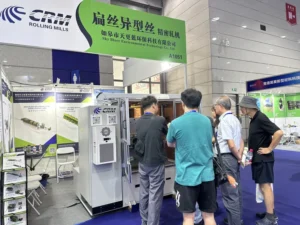
Modern wedge wire rolling lines, like CRM’s Wedge Wire Rolling Mill, integrate advanced sensors, PLC controls, and automated wire feeding to:
- Monitor roll pressure and spacing in real-time
- Detect surface defects during rolling
- Automatically adjust rolling speed and lubrication
- Minimize operator intervention while improving consistency and efficiency
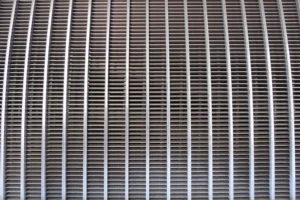
By combining precise mechanical design with digital control, these machines deliver high-quality wedge wire for applications such as water treatment, mining screens, and chemical separation systems.
Post-Rolling Treatments
After rolling, wedge wire often undergoes post-processing to enhance performance and durability:
- Heat treatment: Optional annealing or quenching to relieve stress and improve mechanical properties
- Surface treatment: Polishing, passivation, or anti-corrosion coating
- Dimensional verification: Laser measurement and optical inspection ensure compliance with tolerance specifications
These steps not only ensure performance but also extend service life in demanding industrial applications.
Applications of Triangle Wire
Triangle wire is a versatile material in many industrial sectors:
- Water treatment: Filter screens for municipal and industrial applications
- Mining: Mineral separation screens and classifiers
- Chemical processing: Separation and filtration of solids from liquids
- Oil & gas: Sand control and slurry screens
Different wire sizes and wedge angles are tailored to specific applications, balancing open area, strength, and flow characteristics.
Conclusion
Producing high-quality triangle wire requires careful attention to material selection, rolling precision, post-processing, and quality control. Advanced wedge wire rolling machines, like the CRM Wedge Wire Rolling Mill 2026, streamline these steps while ensuring superior dimensional accuracy, surface finish, and durability.
Ready to elevate your wire production? Contact Sky Bluer Environmental Technology today to explore custom solutions tailored to your manufacturing needs.