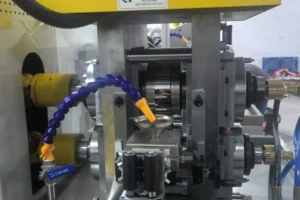
Introduction
Have you ever stopped to consider the intricate process that goes into creating something as seemingly simple as a wire? The wire flattening process is a fascinating and essential segment within the metal wire manufacturing industry, yet it often goes unnoticed by ordinary consumers.
Think about the countless wire-based items we use every single day — from small paperclips to high-precision industrial machinery. Once you understand how these metal wires are processed and shaped, the whole manufacturing journey becomes far more intriguing. Every procedure, from precision shaping to professional annealing, determines whether the finished wire can meet strict industrial specifications.
If you have ever wondered how a regular round metal wire can be processed into perfectly flat, uniform profiles, or if you are simply curious about industrial metal forming technology, this guide will take you through the full intricacies of the wire flattening process.
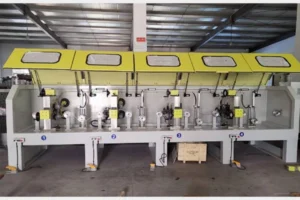
History: Evolution of Wire Flattening Technology
Have you ever paused to appreciate the humble wire surrounding modern life? From ultra-fine lamp filament wires to heavy-duty power and data transmission cables, wire is irreplaceable in daily life and industrial development. But have you ever wondered how raw round metal wire is transformed into neat, uniform flat wire?
The evolution of wire flattening technology is a remarkable journey spanning ancient craftsmanship, continuous innovation, and the industrial revolution era. It started with ancient blacksmiths manually hammering metal rods into flat shapes, and has now developed into fully automatic, high-precision industrial rolling mills.
The development of wire flattening technology perfectly reflects human wisdom, as well as the endless pursuit of production efficiency, dimensional accuracy and product perfection.
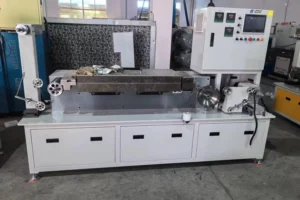
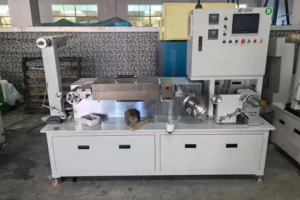
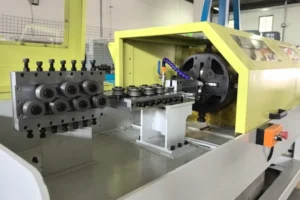
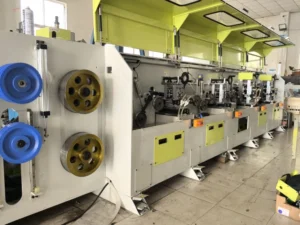
Machine Overview: Components and Functionality Explained for Wire Flattening Mills
Have you ever observed an industrial machine and wondered how all internal components cooperate to complete precise forming work? Just like vehicle engines, household equipment and automated robotic arms, every gear, motor, sensor and controller inside a wire flattening mill performs an irreplaceable role.
All parts work in coordination to process round raw wire into flat profile wire with precise size, stable thickness and smooth surface, achieving high-efficiency and high-precision mass production.
Understanding the internal structure and working principle of wire flattening mills allows you to truly appreciate modern industrial engineering design. This article demystifies the complexity of wire flattening equipment and helps you gain professional insight into the mechanical technology behind metal wire processing.
Applications: Diverse Uses of Wire Flattening Machines
Have you ever thought about how deeply wire flattening machines affect our daily lives and industrial production? These industrial devices may look ordinary, but they feature extremely wide application coverage, involved in construction, general manufacturing, art design, new energy, electronics and many other industries.
Wire flattening machines can produce standard flat wires for industrial use with smooth surfaces and consistent dimensions, and can also shape special profile wires for jewelry, electronic components and customized hardware parts. Versatile and highly adaptable, wire flattening equipment has quietly driven technological upgrades and production innovation across countless sectors.
Whether you are an industry practitioner or simply interested in industrial equipment manufacturing, you will be surprised by the wide applicability and ingenious design of modern wire flattening machines.
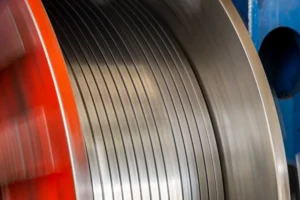
Benefits: Advantages of Using Wire Flattening Equipment
Are you troubled by tangled raw wire, uneven surface quality, or unstable thickness consistency in finished wire products? Professional wire flattening machines perfectly solve these pain points and bring revolutionary advantages to metal wire manufacturing.
From greatly boosting production efficiency to realizing strict quality control, modern wire flattening equipment is reshaping the entire metal wire industry. For factory owners and technical personnel, mastering the value and advantages of wire flattening machines is key to enhancing competitiveness in the market.
With professional flattening equipment, you can stably produce perfectly flat, evenly thick profile wire in much less time compared with traditional manual or semi-mechanical methods. It effectively saves labor costs and raw material waste, while making more innovative wire product designs and special application scenarios achievable.
Maintenance: Tips for Proper Care and Upkeep
Regular maintenance is the foundation of stable and long-term operation for all industrial equipment, and wire flattening mills are no exception. In busy production schedules, daily equipment maintenance is often overlooked — yet neglecting routine care will eventually lead to unexpected breakdowns, costly repairs and suspended production.
Simple, standardized daily maintenance and scientific upkeep habits can keep wire flattening machines running in optimal condition for years, minimizing failure rates and extending service life. This chapter shares practical, easy-to-follow maintenance tips to help you take good care of your wire flattening equipment with minimal time and effort.
Conclusion: Harnessing the Potential of Wire Flattening Technology
In the constantly upgrading wire manufacturing industry, wire flattening machine technology has become one of the most valued innovations by industrial manufacturers. It has completely revolutionized the production and application modes of flat wire and profile wire, serving electronics, new energy, aerospace, machinery manufacturing and many other fields.
After exploring the development history, machine structure, application scenarios, core advantages and maintenance skills of wire flattening technology, it is clear that this forming technology has far-reaching development potential and broad market prospects.
Embracing advanced wire flattening equipment not only optimizes production workflows and improves product precision, but also brings significant economic benefits and environmentally friendly production solutions. From optimizing assembly line efficiency to developing complex customized profile wire products, the value and potential of wire flattening technology is undeniable, and it will continue to empower high-quality development of the global metal wire manufacturing industry.