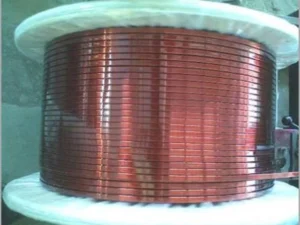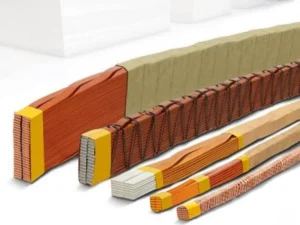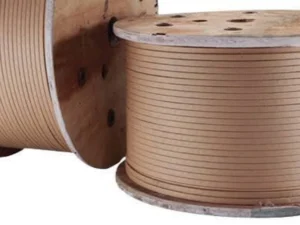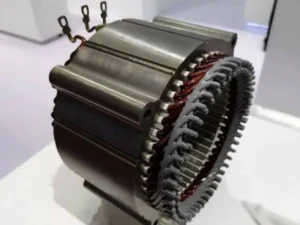
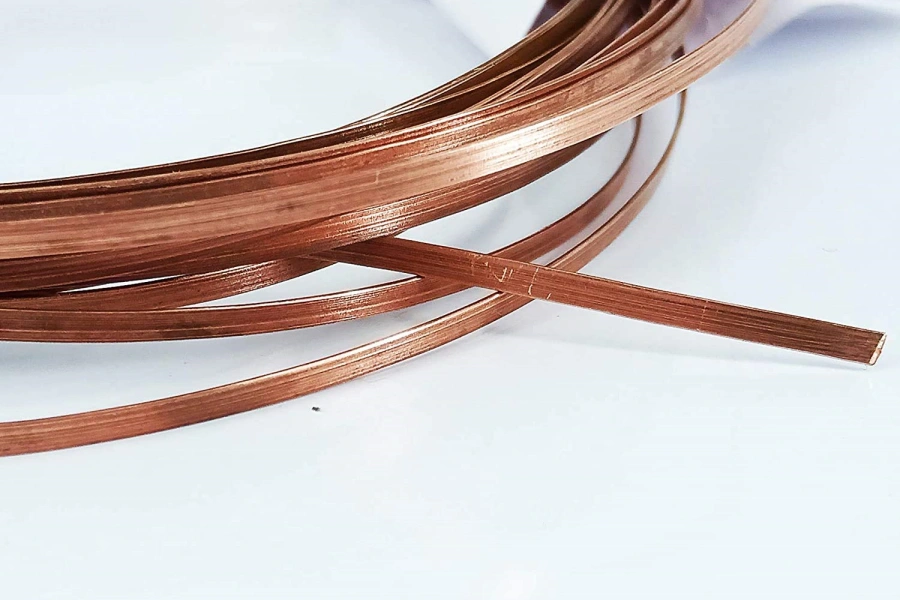
In the era of miniaturized and high-efficiency electrical systems, rectangular magnet wires (also known as paper-covered flat wires or enameled rectangular wires) have become indispensable. These specialized wires—with their flat, rectangular cross-sections—enable tighter windings in motors, transformers, inductors, and electromagnetic coils, maximizing space utilization and improving electrical performance. Behind the production of these critical components lies the rectangular magnet wire machine: a specialized piece of equipment engineered to transform round wire feedstock into precision rectangular wires with consistent dimensions and tailored insulation properties. This article explores the core technology of rectangular magnet wire machines, their key components, manufacturing processes, and the industrial applications driving their importance in modern electrical engineering.
Understanding Rectangular Magnet Wires: Key Roles & Advantages
Rectangular magnet wires are a type of insulated copper or aluminum wire designed with a rectangular cross-section, as opposed to the traditional round shape. Their unique geometry addresses critical challenges in electrical component design, making them the preferred choice for high-performance applications.
Why Rectangular Magnet Wires Outperform Round Wires
The rectangular shape offers distinct advantages that align with the demands of modern electrical systems:
- Space Optimization: Rectangular wires pack tightly in windings, reducing gaps between turns by up to 30% compared to round wires. This enables smaller, more compact motors and transformers—essential for electric vehicles (EVs), portable electronics, and aerospace applications.
- Improved Thermal Conductivity: Tighter winding density enhances heat dissipation, preventing overheating in high-load electrical components. This extends the lifespan and reliability of motors and transformers.
- Enhanced Electrical Efficiency: Reduced winding resistance (due to tighter packing) minimizes energy loss, improving the overall efficiency of electrical systems—a critical factor for energy-saving applications.
- Mechanical Stability: The flat shape provides better structural stability in windings, resisting deformation under vibration or temperature fluctuations—ideal for industrial machinery and automotive components.
Common Applications of Rectangular Magnet Wires
Rectangular magnet wires are the backbone of numerous electrical systems, including:
- Motors: High-efficiency industrial motors, EV traction motors, and servo motors—where compact design and high power density are essential.
- Transformers: Power transformers, distribution transformers, and high-frequency transformers—benefiting from reduced size and improved heat dissipation.
- Inductors & Coils: Electromagnetic coils, inductors for power electronics, and audio coils—leveraging tight winding for precise performance.
- Specialized Electrical Components: Aerospace electrical systems, medical devices, and renewable energy equipment—where miniaturization and reliability are non-negotiable.
Core Components & Technology of Rectangular Magnet Wire Machines
A rectangular magnet wire machine is an integrated system of specialized components, each designed to ensure precision in shaping, insulation, and winding. From wire payoff to final spooling, every stage is optimized to produce consistent, high-quality rectangular wires.
Wire Payoff System: The Foundation of Stable Production
The payoff system is responsible for feeding raw round wire (typically copper or aluminum) into the machine, and it plays a critical role in maintaining consistent tension—preventing wire breakage or deformation. Key types include:
- Power Payoff Machines: Door-type, box-type, frame-type, end shaft, and Longmen pay-off systems. These active systems use motors to control feed speed, ideal for high-volume production and large wire diameters.
- Passive Payoff Machines: Throwing bucket pay-off and over-end pay-off designs. These rely on the machine’s traction to feed the wire, suitable for small-scale production or laboratory-scale applications.
- Core Function: Ensures smooth, controlled feed of raw wire, laying the groundwork for precise shaping and consistent dimensions.
Rectangular Wire Forming & Rolling: The Core Shaping Process
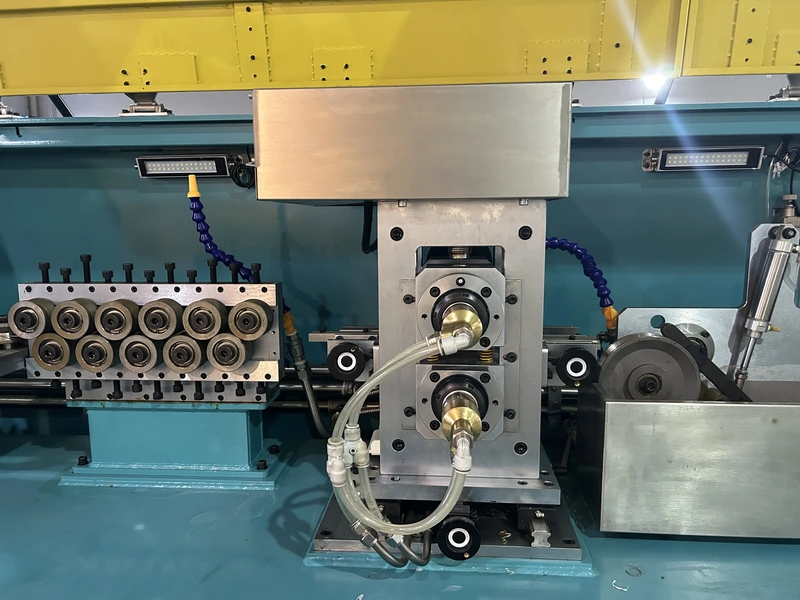
The forming and rolling stage is where round wire is transformed into rectangular wire, and the precision two-roll mill stands as the most advanced technology in this process:
- Precision Two-Roll Mill Advantages: Enhanced rigidity for micron-level dimensional control, minimal maintenance requirements, and surface wear-resistant/anti-rust components that extend machine life.
- Shaping Capabilities: Beyond rectangular wires, these mills can produce flat wires, square wires, and even profiled wires with specialized rolls or additional side/edging rolls.
- Axial Roll Alignment: Servo motors control roll alignment, ensuring consistent width and thickness across the wire length—critical for meeting strict tolerance requirements.
- Material Compatibility: Primarily processes copper (the most common material for magnet wires) but can also handle aluminum and copper alloys, depending on the application.
Tension Control & Winding: Ensuring Quality & Usability
After forming, the rectangular wire undergoes tension control and winding to prepare it for use in electrical components:
- Tension Control Mechanisms: Integrated systems maintain optimal tension throughout the winding process, preventing wire stretching or slack that could compromise dimensional accuracy.
- Winding Options: Finished wire is wound onto bobbins, spools, or custom winding forms—tailored to the specific needs of downstream manufacturing (e.g., motor winding machines).
- Insulation Integration: For enameled rectangular wires, the winding stage may follow insulation application (e.g., enamel coating), ensuring the insulation layer remains intact during winding.
Control System: The Brain of Precision Manufacturing
Modern rectangular magnet wire machines feature advanced control systems that empower operators to achieve exact specifications:
- Parameter Adjustment: Set and fine-tune critical variables, including wire speed, insulation thickness (for coated wires), temperature, and tension.
- Quality Monitoring: Real-time feedback on dimensions, insulation integrity, and winding consistency—enabling immediate adjustments to minimize waste.
- Automation Integration: From manual to fully automatic control, the system adapts to production volume needs, with fully automatic models offering high throughput for large-scale manufacturing.
Rectangular Magnet Wire Manufacturing Process: Step-by-Step Breakdown
The production of rectangular magnet wires involves a sequential workflow, with each stage optimized to ensure precision, consistency, and performance. Below is a detailed breakdown of the process:
1. Feedstock Preparation & Payoff
- Raw Material Selection: High-purity copper or aluminum wire (typically round) is chosen for its electrical conductivity. The wire is inspected for surface defects and consistent diameter.
- Payoff Operation: The raw wire is loaded onto the payoff system (power or passive), which feeds it into the machine at a steady, controlled rate—maintaining tension to avoid tangling or deformation.
2. Forming & Rolling into Rectangular Shape
- Initial Rolling: The round wire passes through the precision two-roll mill, where compressive force flattens it into a rectangular cross-section. The roll gap and alignment are set via servo motors to achieve the target width and thickness.
- Profiling (if applicable): For custom shapes or edge refinement, additional side/edging rolls are used to adjust the wire’s geometry—ensuring sharp corners or rounded edges as per customer requirements.
- Dimensional Inspection: In-line sensors check width, thickness, and straightness, with the control system making real-time adjustments to maintain tolerances.
3. Insulation Application (for Enameled/Paper-Covered Wires)
- Cleaning & Preparation: The rectangular wire is cleaned to remove oil or debris, ensuring proper adhesion of the insulation layer.
- Insulation Coating: Enamel (typically polyimide, polyester, or epoxy) is applied via dipping or extrusion, followed by curing in an oven to form a durable, heat-resistant insulation layer. For paper-covered wires, insulation paper is wrapped around the wire.
- Insulation Thickness Control: The control system regulates the coating process to achieve the desired insulation thickness—critical for electrical insulation and mechanical protection.
4. Tension Control & Final Winding
- Tension Regulation: The insulated rectangular wire passes through tension control mechanisms to ensure consistent tension during winding.
- Winding onto Spools/Bobbins: The wire is wound onto custom spools or bobbins, with the winding speed synchronized to the production line speed. Fully automatic winding systems ensure neat, uniform spools ready for direct use in motor or transformer manufacturing.
- Final Inspection: Finished spools are inspected for dimensional consistency, insulation integrity, and winding quality—ensuring compliance with industry standards (e.g., IEC, ASTM).
Types of Rectangular Magnet Wire Machines: Tailored to Production Needs
Rectangular magnet wire machines come in various configurations, designed to meet diverse production volumes, automation levels, and application requirements:
Based on Production Size
- Laboratory-Scale Machines: Compact, low-volume systems ideal for research and development (R&D) or small-batch custom production. They offer flexibility in parameter adjustment and are suitable for testing new wire designs.
- Industrial-Scale Machines: High-volume production lines capable of continuous operation, with speeds tailored to mass manufacturing of standard or custom rectangular wires. These are used by manufacturers supplying the automotive, aerospace, and electronics industries.
Based on Automation Level
- Manual Machines: Require operator intervention for parameter adjustment, winding, and quality checks. Suitable for low-volume, specialized production or small businesses.
- Semi-Automatic Machines: Combine manual setup with automated forming and winding, balancing flexibility and efficiency.
- Fully Automatic Machines: Integrate feedstock handling, forming, insulation, tension control, winding, and inspection into a single automated workflow. These minimize human error, maximize throughput, and ensure consistent quality—ideal for large-scale manufacturing.
Based on Specialized Capabilities
- Insulation-Specific Machines: Designed to handle specific insulation types, such as enameled rectangular wire machines or paper-covered flat wire machines.
- Profiled Wire Machines: Equipped with specialized rolls to produce custom rectangular profiles (e.g., rounded corners, tapered edges) for unique applications.
- High-Precision Machines: Optimized for ultra-tight tolerances (micron-level) required in aerospace, medical, or high-frequency electrical components.
Choosing the Right Rectangular Magnet Wire Machine: Key Considerations
For businesses looking to invest in rectangular magnet wire manufacturing equipment, selecting the right machine requires aligning technical capabilities with production needs and application requirements:
Match Machine to Production Volume
- Low-Volume/Custom Production: Opt for laboratory-scale or semi-automatic machines, which offer flexibility and lower upfront costs.
- High-Volume Standard Production: Choose fully automatic industrial-scale machines to maximize throughput and minimize operational costs.
Prioritize Dimensional Precision & Tolerance Control
- Critical Applications (Aerospace, Medical): Select machines with servo-controlled roll alignment, in-line laser measuring, and tight tolerance capabilities (±0.001mm).
- General Industrial Applications: Machines with standard precision controls (±0.01mm) may suffice, balancing cost and performance.
Consider Material & Insulation Compatibility
- Material Type: Ensure the machine can process your target material (copper, aluminum, alloy) with the appropriate roll materials and forming parameters.
- Insulation Requirements: If producing insulated wires, confirm the machine supports the desired insulation type (enamel, paper, etc.) and thickness range.
Evaluate Automation & Control Features
- Ease of Use: Intuitive control panels with parameter storage (for repeatable production) reduce operator training time.
- Quality Monitoring: Integrated sensors and inspection systems minimize waste and ensure consistent output.
- Maintenance Needs: Choose machines with durable components (e.g., wear-resistant rolls) and accessible maintenance points to reduce downtime.
Conclusion
Rectangular magnet wire machines are the unsung heroes of modern electrical engineering, enabling the production of compact, high-efficiency components that power our daily lives—from EV motors to medical devices. Their precision forming technology, advanced control systems, and flexible configurations make them indispensable in industries where space optimization, energy efficiency, and reliability are critical. As electrical systems continue to evolve toward miniaturization and higher performance, the demand for high-quality rectangular magnet wires will grow—driving innovation in machine design, automation, and material compatibility. Whether you’re a manufacturer expanding production capabilities, an engineer designing next-generation electrical components, or a researcher exploring new wire technologies, understanding the principles of rectangular magnet wire manufacturing provides valuable insights into the future of electrical systems.