The Intricacies of Tungsten Wire Drawing Machines
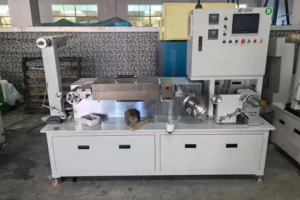
In advanced industrial manufacturing, precision and durability stand as non-negotiable core standards. Among high-end metal processing equipment, tungsten wire drawing machines represent a masterpiece of industrial ingenuity. With exceptional dimensional accuracy and stable mechanical performance, these specialized machines convert raw tungsten materials into ultra-fine, high-purity, premium-quality tungsten wire. To fully grasp the sophisticated technology behind this equipment, it is essential to explore its internal structure, working principles and core operational logic.
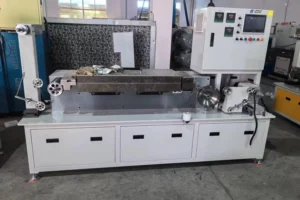
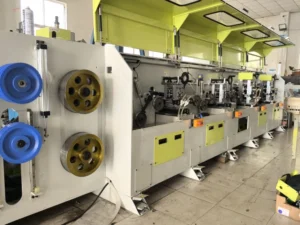
At the core of every tungsten wire drawing machine lies a set of exquisitely engineered drawing dies. Arranged in precise sequential order, these professional dies act as the key forming medium, gradually transforming thick tungsten rods into slender tungsten wires with customizable diameters. During the drawing process, continuous tension and controllable pressure are applied to the tungsten material. As the raw wire passes through each die hole step by step, its cross-sectional diameter is reduced incrementally, while its internal structure and surface finish are refined simultaneously.
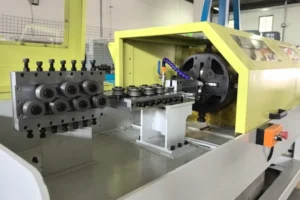
The entire production journey begins with high-quality tungsten raw material spools or coils. Before formal drawing, the raw material undergoes rigorous pre-treatment: professional straightening and thorough cleaning procedures are carried out to remove surface impurities, eliminate bending deformation, and lay a solid foundation for stable drawing and flawless finished wire quality. After preparation, the qualified tungsten raw wire is smoothly fed into the drawing machine to start the precision forming process.
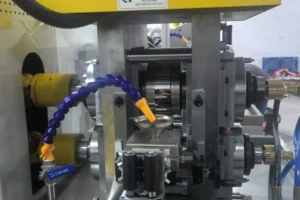
Effectively managing friction and thermal buildup is another critical link in tungsten wire drawing. Tungsten features high hardness and high melting point, generating substantial friction and heat during continuous drawing. For this reason, modern tungsten wire drawing machines are equipped with sophisticated cooling and lubrication systems. These systems greatly reduce surface friction between the wire and dies, avoid overheating deformation of tungsten wire, maintain the structural integrity and surface perfection of the finished product, and meanwhile extend the service life of precision drawing dies, improving overall production efficiency and long-term cost performance.
Stable process operation relies heavily on high-precision tension control mechanisms. The system precisely regulates the pulling tension borne by tungsten wire during its entire conveying and drawing journey. This consistent tension control guarantees uniform wire diameter, stable mechanical properties, and outstanding batch consistency and long-term reliability of finished tungsten wire.
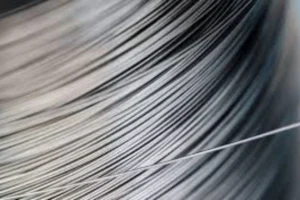
Furthermore, contemporary tungsten wire drawing machines are integrated with intelligent monitoring and automatic control systems. Equipped with high-sensitivity sensors and real-time feedback modules, the equipment continuously monitors core production parameters — including wire diameter, running tension and operating temperature. Operators can make accurate real-time adjustments according to system data, optimizing process parameters at any time and ensuring all finished products fully comply with stringent industrial quality specifications.
In summary, the intricate mechanical design and systematic workflow of tungsten wire drawing machines embody the pinnacle of modern precision engineering. Merging sophisticated mechanical innovation with intelligent control technology, these machines fully release the superior physical and chemical properties of tungsten raw materials. They enable the production of high-performance tungsten wire that serves as an indispensable versatile material across aerospace, electronics, lighting, semiconductor and high-temperature industrial fields.