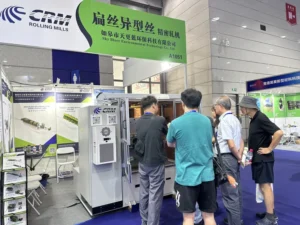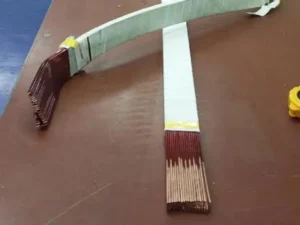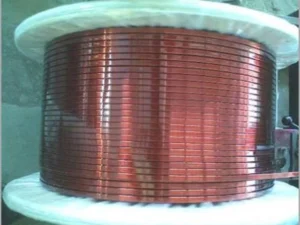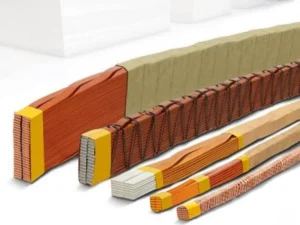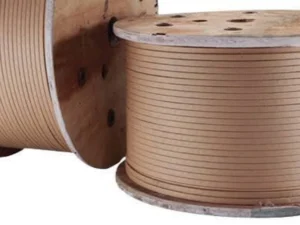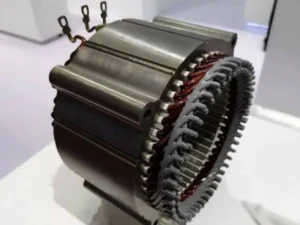
Flat copper wire has become the backbone of high-efficiency electrical systems—from EV motors and transformers to renewable energy inverters—thanks to its superior space utilization, enhanced conductivity, and better heat dissipation compared to round wire. The ability to roll round copper wire into flat wire with precision directly impacts product performance, production costs, and market competitiveness. As a leading manufacturer of copper wire processing equipment (Sky Bluer Environmental Technology Co., Ltd.), we’ve crafted this comprehensive guide to break down the entire process, key equipment, quality control, cost factors, and supplier selection—empowering you to master flat copper wire production with our advanced CRM machines.
Why Roll Round Copper Wire into Flat Wire? Key Advantages
Before diving into the process, it’s critical to understand why flat copper wire is worth the investment. Compared to traditional round copper wire, flat wire offers:
- Higher Packing Density: Fills winding slots 20–30% more efficiently (up to 75% slot fill factor vs. 60% for round wire), increasing power density in motors/transformers .
- Reduced Energy Loss: Lower surface resistance minimizes skin effect (energy waste at high frequencies), cutting power consumption by 5–10% in high-efficiency applications .
- Superior Thermal Management: Flat surfaces improve heat transfer to insulation, preventing overheating in compact designs (e.g., EV battery packs).
- Material Savings: Denser packing reduces total copper usage by 8–12% for the same power output, lowering raw material costs.
These benefits make flat copper wire indispensable for:
- Electric Vehicles (EVs): Motors, battery connectors, and power electronics (IATF 16949 compliant).
- Transformers/Inverters: High-voltage dry-type and oil-immersed transformers (meets IEC 60317 standards).
- Electronics: Miniaturized components, LED drivers, and communication devices (precision tolerance requirements).
- Renewable Energy: Solar inverters and wind turbine generators (high conductivity, low energy loss).
Core Principle: How CRM Machines Roll Round Copper to Flat Wire
The transformation of round copper wire to flat wire relies on cold rolling technology—the gold standard for precision metal forming. Unlike hot rolling (which risks material oxidation and dimensional inconsistency), cold rolling uses controlled compressive force from hardened precision rollers to reshape the wire at room temperature.
Sky Bluer’s CRM machines leverage this principle with advanced engineering:
- Incremental Deformation: The round wire passes through multiple rolling stands, with each pair of rollers compressing the wire by 15–25% per pass. This gradual shaping preserves the copper’s grain structure, enhancing tensile strength (up to 350 N/mm²) and surface quality (Ra ≤0.4 μm).
- Closed-Loop Control: PLC-driven servo systems adjust roller gap, pressure, and speed in real-time, ensuring dimensional accuracy (±0.005 mm tolerance) across long production runs.
- Cold Working Benefits: Strengthens the wire through work hardening, eliminating the need for secondary heat treatment in most industrial applications.
Step-by-Step Guide: Roll Round Copper Wire into Flat Wire with CRM Machines
Producing high-quality flat copper wire requires a systematic 6-step process—each stage optimized by Sky Bluer’s CRM equipment for precision, efficiency, and consistency:
Step 1: Prepare High-Purity Round Copper Wire (Foundation of Quality)
The process starts with selecting the right raw material:
- Copper Grade: Use oxygen-free copper (OFC, ≥99.99% purity) for high-frequency applications (e.g., aerospace electronics) or electrolytic tough pitch (ETP) copper (99.9% purity, 100% IACS conductivity) for industrial use .
- Pre-Cleaning: Remove surface oxides, lubricants, and contaminants with ultrasonic cleaning equipment (integrated into Sky Bluer’s turnkey lines). Oxides can cause microcracks during rolling, compromising wire integrity.
- Pre-Annealing (Optional): For hard-drawn round wire, anneal at 350–450°C to restore ductility (elongation ≥30%), ensuring the wire can withstand rolling without breaking. Sky Bluer offers inline annealing systems for seamless integration.
Step 2: Clean and Straighten the Wire (Critical for Uniform Rolling)
Round wire often develops bends, coils, or residual stresses from drawing/coiling—defects that lead to uneven flatting and surface defects. Sky Bluer’s CRM lines include:
- Precision Straightener: Multi-roller or laser-aligned straighteners eliminate deformations, achieving ±0.005 mm straightness tolerance.
- Tension Control: Dancer arm systems maintain stable tension (0.5–5 N) during feeding, preventing slack or overstretching.
- Dry Cleaning: Brushes or air knives remove dust and residual lubricant, ensuring the wire enters the rolling mill in a clean, stress-free state.
Step 3: Core Rolling & Shaping (Transform Round to Flat)
This is the most critical stage—where the round wire is converted into a precise flat profile using Sky Bluer’s CRM flat wire rolling mill:
- Equipment Configuration: 3–6 rolling stands with tungsten carbide rollers (wear-resistant, polished to ≤0.001 mm precision) arranged in 2Hi or 4Hi setups.
- Rolling Process:
- First Pass: Round wire → oval profile (initial flattening of two opposite sides).
- Subsequent Passes: Oval → rectangular → flat profile, with each stand reducing thickness and adjusting width to meet target dimensions.
- Key Parameters: Sky Bluer’s PLC allows programming of:
- Target thickness: 0.1–3.5 mm
- Target width: 0.8–12.0 mm
- Dimensional tolerance: ±0.005 mm (meets GB/T 3114-2023 standards) .
- Sky Bluer Advantage: Inline laser gauges (850 scans/second) monitor width and thickness in real-time, automatically adjusting roller gap to correct deviations—ensuring 99.8% dimensional accuracy.
Step 4: Intermediate Annealing (Restore Ductility)
Cold rolling introduces residual stresses that harden the copper, reducing flexibility and increasing the risk of cracking during subsequent processing. Intermediate annealing solves this:
- Process: The flat wire passes through a continuous annealing furnace heated to 350–600°C (temperature varies by copper grade and wire size).
- Protective Atmosphere: Nitrogen or hydrogen-nitrogen mix prevents oxidation, maintaining a bright surface finish (Ra ≤0.4 μm).
- Cooling: Water or gas quenching rapidly stabilizes the wire’s structure, achieving:
- Soft annealed state: Tensile strength 200–250 N/mm², elongation ≥30% (ideal for winding).
- Semi-hard state: Tensile strength 280–330 N/mm², elongation ≥15% (for structural applications).
- Sky Bluer Solution: Inline annealing systems integrate seamlessly with rolling mills, enabling continuous production without downtime.
Step 5: Finishing & Calibration (Achieve Exact Specifications)
After annealing, the wire undergoes final refinement to meet strict quality standards:
- Finishing Rolls: Polished carbide rollers smooth the surface (Ra ≤0.2 μm) and correct minor dimensional deviations.
- Edge Trimming: Optional deburring tools remove sharp edges (edge radius 0.1–0.3 mm), preventing insulation damage during winding.
- Turkshead Straightener: Aligns the flat wire and stabilizes edges, ensuring squareness (90° angle tolerance ±0.1°) for consistent winding.
Step 6: Quality Inspection & Packaging (Ensure Compliance)
No production process is complete without rigorous quality control. Sky Bluer’s CRM lines include automated testing equipment to verify:
| Inspection Item | Test Method | Acceptance Criteria |
| Dimensional Accuracy | Laser gauge measurement | ±0.005 mm (thickness/width) |
| Surface Quality | Vision system + manual inspection | No scratches, oxides, or burrs (Ra ≤0.4 μm) |
| Electrical Conductivity | Eddy current testing | ≥98% IACS (ETP copper), ≥99.5% IACS (OFC) |
| Mechanical Properties | Tensile testing machine | Elongation ≥30% (soft annealed) |
| Squareness | Optical comparator | ±0.1° angle tolerance |
Qualified flat wire is then wound onto spools (for magnet wire) or cut into fixed lengths (for busbars) using Sky Bluer’s servo-controlled take-up units. Packaging includes moisture-proof wrapping and labeling with material type, dimensions, batch number, and production date—ensuring traceability.
Key Equipment for Rolling Round Copper to Flat Wire (CRM Turnkey Line)
To achieve consistent, high-quality production, a complete flat wire rolling line (supplied by Sky Bluer) includes:
- Automatic Payoff Unit: Feeds round copper wire smoothly, with tension control to prevent tangling.
- Wire Drawing Machine (Optional): Reduces initial round wire diameter to the required size (2.0–10.0 mm) with ±0.01 mm tolerance.
- Precision Straightener & Cleaner: Prepares wire for rolling, eliminating defects and contaminants.
- CRM Flat Wire Rolling Mill: Core equipment for shaping round wire into flat profiles (3–6 rolling stands, laser monitoring).
- Inline Annealing Furnace: Restores ductility, with protective atmosphere and precise temperature control.
- Turkshead Straightener & Finishing Rolls: Calibrates dimensions and smooths surfaces.
- Automatic Take-Up Unit: Winds finished flat wire onto spools or cuts to length, with adjustable tension.
- Quality Control System: Laser gauges, vision systems, and conductivity testers for real-time inspection.
Factors Influencing Production Cost of Flat Copper Wire
Understanding cost drivers helps optimize your production and budget:
- Raw Material Cost: Copper prices (global market fluctuations) account for 60–70% of total cost. Choosing the right grade (ETP vs. OFC) balances performance and expense.
- Equipment Quality: High-precision CRM machines minimize waste (≤2% vs. 5–8% for low-cost equipment) and reduce long-term maintenance costs.
- Production Efficiency: Sky Bluer’s continuous inline lines (up to 350 m/min speed) cut labor costs by 50% compared to batch processing.
- Energy Consumption: CRM machines use variable frequency drives (VFD) and energy-efficient motors, saving 15–30% on electricity.
- Supplier Location: Chinese manufacturers like Sky Bluer offer 30–40% lower equipment costs than European/Japanese brands, with comparable quality (ISO 9001 certified).
How to Choose the Best Copper Wire Rolling Equipment Supplier
Selecting the right supplier is critical for long-term success. Key criteria to evaluate:
- Technical Expertise: Look for 10+ years of experience in copper wire processing (Sky Bluer has supplied 500+ clients worldwide).
- Customization Capability: Ensure the supplier can tailor equipment to your target dimensions (thickness/width), material grade, and production volume.
- Equipment Quality: Verify compliance with international standards (IEC 60317, GB/T 3114-2023) and ask for tolerance guarantees.
- After-Sales Support: 24/7 technical support, on-site installation training, and a 1-year warranty (Sky Bluer offers global spare parts delivery).
- Global Experience: Choose a supplier with export experience to 20+ countries (Sky Bluer serves Europe, USA, Japan, and Southeast Asia) for compliance with local industry standards.
Why Choose Sky Bluer CRM Copper Wire Rolling Machines?
Sky Bluer Environmental Technology Co., Ltd. stands out as a trusted partner for flat copper wire production, offering four unbeatable advantages:
- Precision Engineering: CRM machines achieve ±0.005 mm dimensional tolerance, laser monitoring, and tungsten carbide rollers—ensuring consistent quality.
- Turnkey Solutions: Complete lines from payoff to packaging, with seamless integration of cleaning, rolling, annealing, and inspection.
- Cost Efficiency: 30–40% lower equipment costs than global brands, plus energy-saving design and minimal waste (≤2%).
- Global Support: 24/7 technical assistance, on-site training, and a 1-year warranty—backed by a track record of 99% customer satisfaction.
Tips for Successful Flat Copper Wire Production
To maximize productivity and quality:
- Define Clear Specifications: Document target thickness, width, tolerance, surface finish, and mechanical properties before purchasing equipment.
- Invest in Inline Annealing: Avoid batch annealing (time-consuming, inconsistent) by choosing Sky Bluer’s inline systems.
- Maintain Roller Cleanliness: Regularly clean and polish rollers to prevent surface defects on the wire.
- Use Protective Atmospheres: Prevent oxidation during annealing with nitrogen or hydrogen-nitrogen mixes.
- Train Operators: Leverage Sky Bluer’s on-site training to ensure proper machine operation and troubleshooting.
Conclusion
Rolling round copper wire into flat wire is a precision-driven process that requires advanced equipment, strict quality control, and strategic supplier selection. By following the 6-step process outlined in this guide and partnering with a trusted manufacturer like Sky Bluer, you can produce high-quality flat copper wire that meets the demands of EVs, transformers, and electronics—while optimizing costs and scaling production.
Sky Bluer’s CRM machines combine technical innovation, cost efficiency, and global support to help you stay competitive in the rapidly growing flat copper wire market. Whether you’re upgrading an existing line or building a new production facility, our team of engineers will tailor a solution to your specific needs.
Contact Sky Bluer Environmental Technology Co., Ltd. today to request a custom proposal, view a live demonstration of our CRM flat wire rolling mill, or get a quote for turnkey production lines.