Copper wire is the lifeblood of modern industry—powering electrical systems, electronics, telecommunications, and automotive technology with its unmatched electrical conductivity and thermal performance. Behind every spool of high-quality copper wire lies a sophisticated manufacturing process, driven by specialized equipment known as copper wire making machines. But how do these machines transform raw copper rods into precision wires of varying diameters? What key technologies ensure consistent quality and performance? This article explores the core principles of copper wire manufacturing technology, the critical components of wire making machines, and their far-reaching industrial applications.
.webp)
The Basics of Copper Wire Manufacturing Process
Copper wire production is a precision metal forming process that converts solid copper rods (or alloy feedstock) into thin, uniform wires through controlled deformation. The core method—wire drawing—relies on pulling the copper through progressively smaller dies to reduce diameter while maintaining structural integrity. Unlike traditional metalworking, this process preserves copper’s inherent properties (conductivity, ductility) while achieving precise dimensional control, making it ideal for industries with strict performance standards.
Key Stages in Copper Wire Production
A complete copper wire manufacturing line follows a sequential workflow, guided by the copper wire making machine’s components:
- Feedstock Preparation: Raw copper rods (typically 8mm-12mm in diameter) are inspected for purity and surface quality, ensuring no defects that could compromise the final wire.
- Wire Payoff: The copper rod is loaded onto a payoff unit, which feeds the material into the machine at a steady, controlled rate—preventing tangling or uneven tension.
- Drawing & Diameter Reduction: The rod passes through a series of wire drawing dies (from larger to smaller openings). Each die applies compressive force, elongating the copper and reducing its diameter to the target size (ranging from a few millimeters to ultra-fine wires for electronics).
- Tension Control: A dedicated tensioning system maintains consistent force throughout the drawing process, avoiding wire breakage or deformation that would affect conductivity.
- Cooling & Lubrication: Heat generated by friction during drawing is dissipated via a cooling system, while lubricants reduce wear on dies and the wire surface—preserving smoothness and material properties.
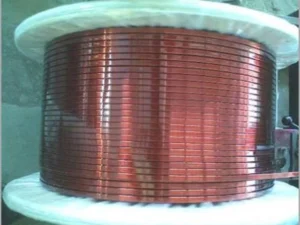
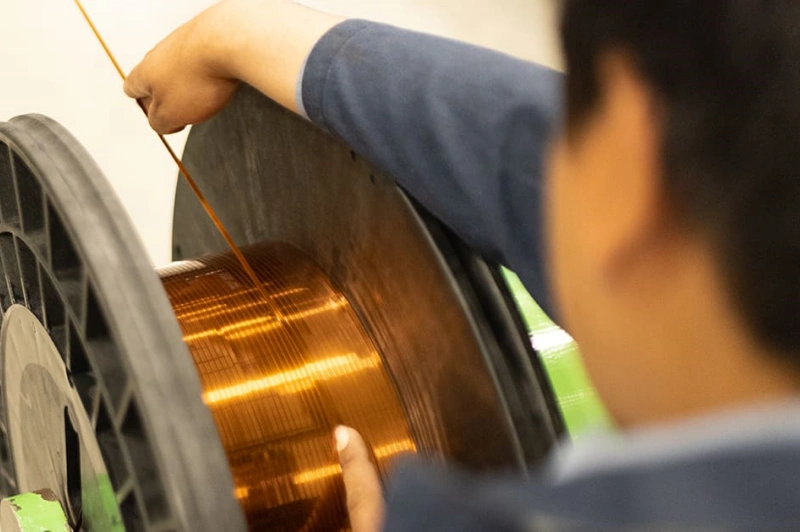
- Take-Up & Spooling: The finished wire is collected onto a take-up reel, spooled into standardized coils for storage, transportation, or further processing (e.g., annealing, insulation).
What Makes Copper Wire Making Machines Unique?
Copper wire making machines (also referred to as wire drawing machines or rolling mills) are specialized for the unique properties of copper and its alloys (brass, copper-nickel):
- Die Compatibility: Drawing dies are made from ultra-hard materials (diamond, carbide) to withstand copper’s ductility and prevent wear, ensuring consistent diameter reduction.
- Precision Tension Regulation: Copper is prone to stretching or breaking if tension is inconsistent—these machines integrate dynamic tension control to maintain uniformity.
- Material Versatility: Advanced models can process pure copper, brass, and copper alloys, adapting to different industrial requirements (e.g., corrosion resistance for marine applications, high strength for automotive wiring).
Critical Components of a Copper Wire Making Machine
The performance of a copper wire making machine depends on its core components, each designed to optimize precision, efficiency, and quality:
Wire Payoff Unit
- Function: Holds the raw copper rod or spool and feeds it into the drawing system.
- Key Features: Equipped with tension brakes and alignment guides to ensure smooth, consistent feeding—eliminating slack or jamming that could damage the wire.
Wire Drawing Dies & Draw Plates
- Wire Drawing Dies: The “heart” of the machine—each die has a tapered opening that reduces wire diameter. Dies are replaceable to accommodate different wire sizes.
- Draw Plates: Support and align the dies, ensuring the wire passes through the center of each opening for uniform diameter reduction. High-quality draw plates minimize friction and prevent surface scratches.
Tensioning System
- Function: Maintains constant tension on the wire during drawing.
- Importance: Inconsistent tension leads to uneven wire thickness, breakage, or reduced conductivity. Modern systems use sensors and actuators to adjust tension in real time.
Cooling & Lubrication Systems
- Cooling System: Dissipates heat generated by friction between the wire and dies. Prevents overheating, which can degrade copper’s electrical properties and cause surface defects.
- Lubrication System: Applies specialized oils or emulsions to reduce friction, extend die life, and ensure a smooth wire surface—critical for electrical applications where surface irregularities increase resistance.
Take-Up Reel
- Function: Collects the finished wire into coils of specified lengths.
- Key Features: Variable speed control to match the drawing rate, preventing wire stretching. Reels are available in different sizes for small-batch (laboratory use) or large-scale (industrial production) applications.
Key Advantages of Modern Copper Wire Making Machines
Modern copper wire making machines offer significant benefits over traditional manufacturing methods, enabling high-quality, scalable production:
Precision Dimensional Control
- Capability: Achieves micron-level accuracy in wire diameter (tolerances as tight as ±0.001mm for ultra-fine wires).
- Application Impact: Ensures wires meet strict industrial standards for electrical components, where even minor deviations can cause performance issues.
Superior Surface Quality
- Result: Produces smooth, defect-free wires with no scratches, pits, or oxidation.
- Benefit: Reduces electrical resistance and improves conductivity—essential for high-performance applications like telecommunications and electronics.
Scalability & Versatility
- Scalability: Machines are available in capacities ranging from small bench-top models (for custom or low-volume production) to high-speed lines (producing thousands of meters of wire per hour).
- Versatility: Can process pure copper, brass, and copper alloys, adapting to diverse industry needs (e.g., brass wire for connectors, copper-nickel wire for marine wiring).
Consistent Material Property Preservation
- Function: Controls tension, temperature, and deformation to preserve copper’s inherent properties (electrical conductivity, thermal performance, ductility).
- Value: Ensures wires maintain reliability over time, critical for safety-critical applications like automotive wiring and power distribution.
Industrial Applications of Precision Copper Wires
Copper wires produced by these machines are indispensable across multiple sectors, leveraging their unique combination of conductivity, durability, and formability:
Electrical & Electronics Industry
- Wiring & Conductors: Household and industrial electrical wiring, power cables, and bus bars—where high conductivity minimizes energy loss.
- Electronic Components: Ultra-fine copper wires for printed circuit boards (PCBs), microchips, and connectors—enabling miniaturization of devices like smartphones and laptops.
Telecommunications & Data Transmission
- Communication Cables: Copper wires (e.g., twisted pairs, coaxial cables) for landline phones, internet connections, and data centers—delivering fast, reliable signal transmission.
Automotive & Transportation
- Vehicle Wiring Harnesses: Copper wires for engine controls, infotainment systems, and electric vehicle (EV) batteries—withstanding vibration, temperature fluctuations, and high current loads.
- Heat Exchangers: Copper wires for automotive radiators and heat sinks—leveraging thermal conductivity to dissipate heat efficiently.
Construction & Infrastructure
- Building Wiring: Commercial and residential electrical systems, where copper’s durability and corrosion resistance ensure long-term reliability.
- Power Distribution: High-voltage copper cables for transmitting electricity from power plants to homes and businesses.
Choosing the Right Copper Wire Manufacturing Solution
For businesses looking to invest in copper wire production, selecting the right machine requires considering key factors aligned with their specific needs:
Production Volume & Speed
- High-Volume Needs: Choose continuous-duty machines with high drawing speeds (up to 100m/min) and large-capacity payoff/take-up units.
- Low-Volume/Custom Production: Opt for flexible, bench-top models that allow easy die changes and parameter adjustments for small batches or specialized wires.
Wire Diameter Range
- Ensure the machine’s die compatibility covers your target diameter range (e.g., 0.01mm-5mm for electronics, 1mm-10mm for construction wiring).
Material Compatibility
- Confirm the machine can process your desired material (pure copper, brass, or specific copper alloys) with the right die materials and lubrication systems.
Quality Control Features
Prioritize machines with integrated sensors for diameter monitoring, tension control, and temperature regulation—reducing waste and ensuring consistent quality.
Conclusion
Copper wire making machines are the backbone of modern manufacturing, transforming raw copper into precision wires that power our daily lives. By combining advanced drawing technology, precise component coordination, and intelligent quality control, these machines deliver high-conductivity, reliable wires tailored to diverse industrial needs. As industries like EVs, renewable energy, and electronics grow, the demand for high-quality copper wire will continue to rise—driving innovation in machine design, automation, and efficiency. Whether you’re a manufacturer looking to optimize production or an industry professional seeking to understand the technology behind copper wire, mastering the principles of copper wire manufacturing provides valuable insights into the future of industrial progress.