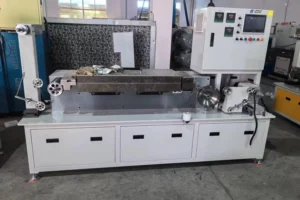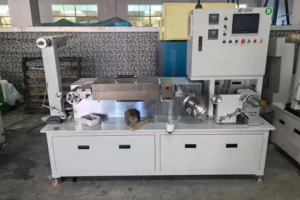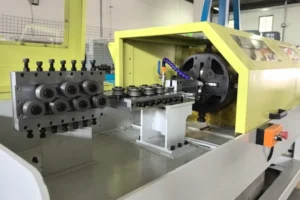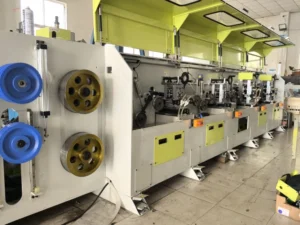
1. What is an Automatic Wire Flattening Mill?
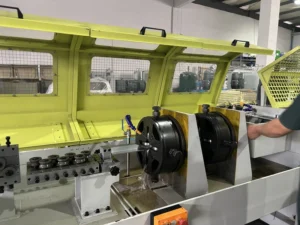
An automatic wire flattening mill — also known as a wire flattener or wire flattening machine — is specialized equipment designed to reduce the thickness of wires or metal strips while maintaining their original width. By flattening and precisely controlling thickness reduction, it is a common production method in the wire industry for manufacturing flat wires with specific thickness and width dimensions to meet customized application needs.
2. Key Components & Core Functions
| Component | Detailed Description | Core Functions |
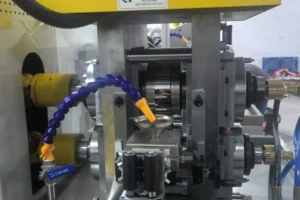
| Flattening Rolls | – Material: Standardly made of hardened steel or carbide: Cylindrical with a hardened surface Precisely aligned and spaced to form a nip (gap) | The core component for flattening action. Wires/strips pass through the nip between rolls, achieving the desired flat shape through controlled compression. |
| Mill Stand | – Serves as the support and alignment structure for flattening rolls stability and correct roll alignment during operation stations to accommodate various flattening rolls (based on required thickness reduction) | Supports and aligns flattening rolls, guarantees processing stability, and adapts to different thickness reduction demands via multi-station design. |
| Drive System | – Powered by electric motors Enables precise control over speed and torque | Drives flattening rolls to operate, ensuring consistent and accurate flattening operations through stable speed and torque regulation. |
| Tension Control Mechanisms | – Integrated traction and tension-regulating devices | Maintains proper tension during flattening, prevents material slippage or wrinkling, and ensures controlled feeding and traction of wires/strips. |
| Roll Gap Adjustment Mechanisms | – Equipped with precision gap-adjusting structures | Enables precise control over thickness reduction, allowing operators to achieve the desired material thickness while preserving width. |
| Cooling & Lubrication Systems | – Cooling system: Dissipates heat generated during flattening, maintains optimal material temperature, and prevents distortion Lubrication system: Reduces friction between rolls and wires/strips | Ensures smooth operation, avoids material deformation caused by overheating, and extends the service life of flattening rolls. |
3. Industry Applications
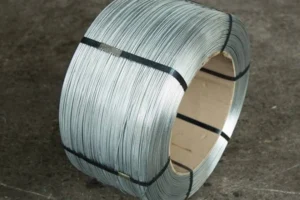
Wire flattening mills are widely used across multiple sectors to produce high-precision flat wires or strips for diverse applications:
- Wire Mesh Manufacturing: Produces flat wires for industrial meshes, filters, and screens.
- Automotive Industry: Supplies flat wires for springs, electrical contacts, and connectors.
- Electronics Sector: Manufactures precision flat wires for circuit board components and electronic connectors.
- Jewelry Making: Creates custom flat wires for jewelry components (e.g., chains, pendants).
- Other Industries: Applied in aerospace, construction, and medical device manufacturing for specialized flat wire requirements.