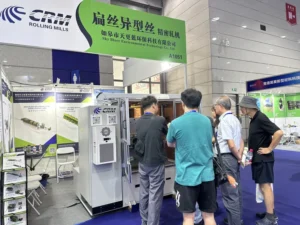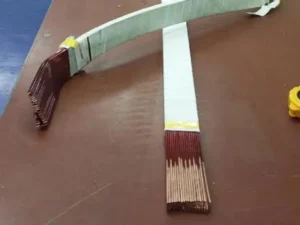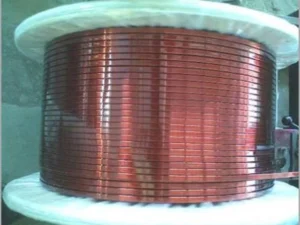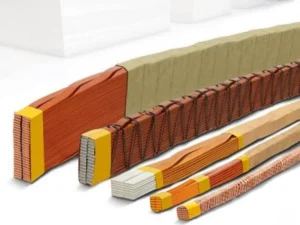
Wire drawing machine process is the backbone of precision wire manufacturing, transforming raw metals into high-performance wires used in medical devices, aerospace components, electronics, and more. For specialized materials like stainless steel, molybdenum, and Nitinol—each with unique properties—this process requires meticulous control and material-specific techniques. In this guide, we break down the step-by-step production journey, from raw material selection to final quality assurance.
Introduction: The Critical Role of Wire Drawing Machines
Wire drawing is a metalworking process that reduces wire diameter while enhancing mechanical properties like strength and ductility. For stainless steel (corrosion-resistant), molybdenum (high-temperature tolerance), and Nitinol (shape memory/superelasticity), wire drawing machines must be calibrated to accommodate each material’s unique characteristics. According to industry data, the global stainless steel wire market alone exceeds $12 billion, with fine wire accounting for 35% of demand—driven by medical and microelectronics applications .
Step 1: Material Selection – The Foundation of Quality
The production process begins with selecting raw materials that meet strict purity and composition standards:
- Stainless Steel: Grades like 304, 316L (austenitic), 430 (ferritic), or 410 (martensitic) are chosen based on application needs—316L, for example, offers enhanced corrosion resistance for medical tools .
- Molybdenum: High-purity molybdenum metal (99.95%+ purity) is used to leverage its 2,623°C melting point and excellent electrical conductivity, critical for aerospace and electronics .
- Nitinol: A near-equiatomic nickel-titanium alloy (50-55% nickel) requires precise composition control—even 0.1% variations alter its shape memory transition temperature .
Raw materials undergo pre-inspection, including ultrasonic and chemical analysis, to eliminate defects .
Step 2: Preparatory Setup – Annealing, Cleaning & Machine Calibration
Before drawing, raw materials (typically 5-12mm rods) undergo preparation to optimize processability:
- Annealing: Controlled heating (in vacuum or protective atmospheres) relieves internal stresses and improves ductility. For Nitinol, this step sets the material’s shape memory properties .
- Cleaning: Chemical pickling (e.g., HNO₃+HF solutions for stainless steel) or mechanical descaling removes oxides and contaminants that could damage dies or wire surfaces .
- Machine Configuration: Die sets with precision-engineered (entry cone, working band, exit zone) are installed. Lubrication systems are tailored—dry drawing uses metallic soaps, while wet drawing employs emulsions for heat-sensitive materials like Nitinol .
Step 3: The Wire Drawing Process – Precision in Action
The core of production involves feeding the prepared rod through a series of dies:
- Progressive Diameter Reduction: Each die reduces the wire diameter by 12-18% per pass (depending on material). For ultra-fine wire (0.01-0.15mm), 10+ passes may be required .
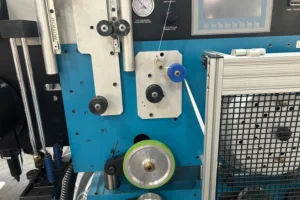
- Tension & Speed Control: CNC systems maintain consistent tension (via sensors) and drawing speed to prevent wire breaks—critical for brittle materials like molybdenum .
- Lubrication Management: Nano-coatings (e.g., MoS₂/graphene) or specialized oils minimize friction (coefficient ≤0.04) and heat, preserving surface quality (Ra ≤0.2μm) .
Step 4: Intermediate Annealing – Combating Work Hardening
Materials like stainless steel and molybdenum are prone to work hardening during drawing. Intermediate annealing (between passes) uses gradient heating and cooling to:
- Relieve internal stresses
- Restore ductility for further diameter reduction
- Prevent cracking or brittleness
Nitinol may skip this step if initial annealing is optimized, but precise temperature control remains critical to retain shape memory .
Step 5: Final Drawing Passes – Achieving Target Specifications
The wire undergoes final passes to reach the desired diameter (as small as 0.03mm for medical Nitinol stents):
- Dimensional Accuracy: Laser (0.1μm resolution) monitors diameter in real time, with dynamic adjustments to maintain ISO 2041 H1 tolerances (e.g., ±0.002mm for Φ0.1mm wire) .
- Surface Finish Optimization: Polishing dies or ultrasonic cleaning ensures defect-free surfaces—essential for medical applications where biocompatibility is non-negotiable .
Step 6: Finishing Operations & Quality Assurance
After reaching the target diameter, the wire undergoes:
- Finishing: Straightening, spooling, or cutting to length. For medical use, cleanroom processing prevents contamination .
- Quality Inspection:
- Dimensional checks (diameter, roundness, straightness)
- Mechanical testing (tensile strength, elasticity)
- Surface analysis (via machine vision)
- Traceability: Each coil is assigned a unique ID linking to raw material batches and process parameters (complying with ISO 9001/IATF 16949) .
Key Challenges & Solutions in Wire Drawing
- Wire Breaks: Caused by over-reduction or poor lubrication—solved by optimizing pass schedules and regular die inspections .
- Surface Defects: Prevented by strict cleaning protocols and lubrication maintenance.
- Material-Specific Issues: Molybdenum requires slower drawing speeds; Nitinol needs precise temperature control during all stages .
Applications of Finished Wire
- Stainless Steel: Filters, fasteners, medical instruments, and automotive components.
- Molybdenum: Lamp filaments, semiconductor contacts, and nuclear reactor parts .
- Nitinol: Medical stents, orthodontic wires, aerospace actuators, and consumer electronics .
Conclusion: Precision Engineering for Critical Industries
Producing stainless steel, molybdenum, and Nitinol wire requires a synergy of advanced equipment, material expertise, and quality control. By following these meticulous steps—from raw material selection to traceable finishing—manufacturers deliver wires that meet the stringent demands of medical, aerospace, and high-tech industries. As technology advances, innovations like AI-driven process monitoring and nanolubricants continue to push the boundaries of wire drawing precision.