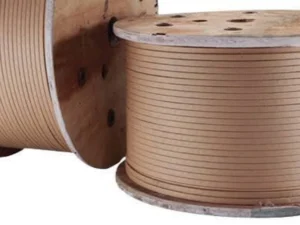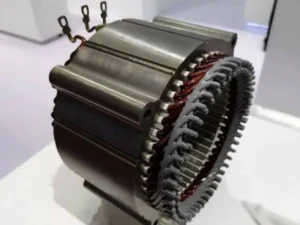
Introduction to Stainless Steel Flat Wire Production
With years of experience in the machinery manufacturing industry, we aim to help you understand the process of producing high-quality stainless steel flat wire.
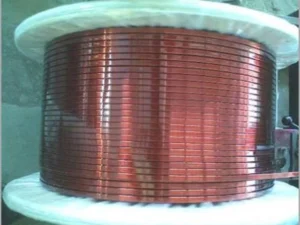
The production of stainless steel flat wire involves several key steps: from wire pay-off, drawing, rolling, annealing, cleaning, to take-up and finished coil packaging. Each step is essential to achieve precise dimensions, edge and surface quality.
-300x200.webp)
Step 1: Stainless Steel Material Selection for Flat Wire
Choosing the correct stainless steel grade is foundational. Common grades include:
- 304: Excellent corrosion resistance, commonly used in construction, kitchenware, and household appliances.
- 316: Superior corrosion resistance, ideal for marine, chemical, and medical applications.
- 430: Ferritic stainless steel, often used in automotive trims, decorative applications, and appliances.
The selected alloy determines ductility, hardness, and suitability for further processing. Careful evaluation of chemical composition and mechanical properties minimizes production issues such as cracking or uneven deformation during rolling.
Step 2: Wire Drawing & Intermediate Annealing
- Wire Drawing: Pull rods through precision dies to achieve required diameter; maintain proper lubrication to prevent die wear and scratches. Monitor drawing speed and take intermediate measurements.
- Intermediate Annealing: Restores ductility by relieving work hardening; performed in controlled atmospheres to prevent oxidation.
Step 3: Flattening & Edge Shaping
Once the wire has sufficient ductility, round wire is transformed into flat wire using a precision rolling mill. Multi-pass rolling gradually reduces the thickness to the desired specification, while edge shaping ensures the correct R-angles for applications requiring precise bending or slotting. The roller configuration is critical to achieving uniform width and flatness, minimizing taper or curvature. For high-alloy grades such as 316L or duplex stainless steel, careful control of rolling speed and reduction ratios is necessary to avoid cracking during flattening.
Step 4: Final Annealing & Surface Treatment
After achieving the target dimensions, final heat treatment restores mechanical flexibility and reduces residual stresses. Surface treatments, including pickling, passivation, and polishing, enhance corrosion resistance and improve surface finish. Modern production lines often integrate annealing and surface treatment into a continuous process, which increases efficiency while ensuring consistent quality.
Step 5: Quality Control and Packaging of Stainless Steel Flat Wire
- Dimensional Checks: Width, thickness, R-angle.
- Mechanical Tests: Tensile strength, hardness, elongation.
- Surface Inspection: Free of scratches, pits, oxidation.
- Packaging: Coiling, protective films, reinforced reels to prevent deformation during storage and transport.
Typical Stainless Steel Flat Wire Sizes and Applications
| Width (mm) | Thickness (mm) | Material/Grade | Common Applications | Typical R-angle (mm) |
| 0.5 – 2.0 | 0.1 – 0.5 | 304, 316 | Electronics, terminals, connectors | 0.1 – 0.3 |
| 2.0 – 6.0 | 0.3 – 1.0 | 304, 430 | Automotive clips, springs, fasteners | 0.2 – 0.5 |
| 6.0 – 12.0 | 0.5 – 2.0 | 316, 321 | Construction, medical devices, architectural trims | 0.3 – 0.8 |
| 12.0 – 25.0 | 1.0 – 3.0 | Duplex, 304L | Industrial machinery, chemical industry, heavy-duty fasteners | 0.5 – 1.0 |
These flat wires are produced with precision rolling mills capable of handling a wide range of stainless steel grades, widths, thicknesses, and R-angles, supporting customized production for diverse industrial requirements.
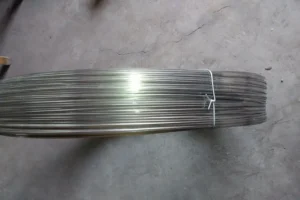
Production Challenges and Solutions in Stainless Steel Flat Wire Manufacturing
- Surface defects
Stainless steel is susceptible to scratches, scale, or minor dents during drawing/rolling, impacting performance and appearance. Prevention relies on wear-resistant dies, consistent lubrication, and controlled atmospheres (inert gases or oil-based lubricants) to minimize oxidation and surface damage for a smooth finish.
- Dimensional tolerances
Precision in thickness, width, and R-angles is critical for electronics, automotive, and medical applications. Multi-pass rolling paired with real-time feedback systems continuously monitors dimensions, automatically adjusting roller pressure and speed to keep tolerances within specs and ensure uniformity across long coils.
- High-alloy steels
Harder, less ductile grades (316L, 321, duplex) are prone to cracking during processing. Intermediate annealing relieves internal stresses and restores ductility, while reduced rolling speeds and carefully controlled reduction ratios enable safe production without compromising mechanical integrity.
- Productivity
High-volume, quality flat wire production requires automation and inline inspection. Automated mills with continuous monitoring boost speeds while maintaining accuracy and surface quality. Inline defect detection allows immediate adjustments, reducing waste and enhancing efficiency.
Conclusion: Key Steps to Producing High-Quality Stainless Steel Flat Wire
Producing high-quality stainless steel flat wire requires unmatched precision at every stage of manufacturing. Sky Bluer specializes in precision rolling solutions for stainless steel flat wire, offering full customization for widths, thicknesses, and R-angles.
Our rolling mills achieve width precision up to ±0.002 mm, thickness accuracy of ±0.002 mm, and surface brightness with Ra ≤ 0.3 μm, meeting the highest standards across industries like automotive, electronics, and medical devices.
In summary, the process of producing stainless steel flat wire step by step demands careful attention to each stage, from material selection to final finishing. Each step, when executed to high standards, ensures that the finished product delivers superior performance and consistency.
Contact Sky Bluer Environmental Technology Co., Ltd today to learn how our precision flat wire rolling mills can meet your stainless steel production needs.