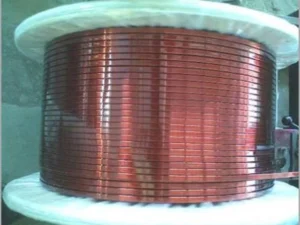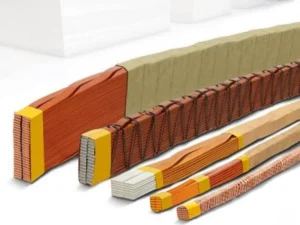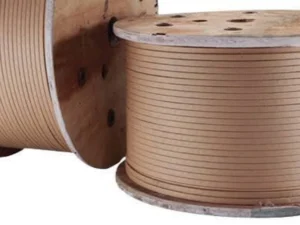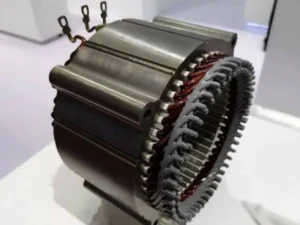
In the era of high-precision industrial manufacturing, metal flat wire has become an indispensable material for critical components across construction, automotive, aerospace, and electronics sectors. Its uniform thickness, high strength, and stable mechanical properties depend entirely on the performance of core processing equipment—the metal flat wire rolling mill (also known as a wire flattening mill machine). As a key asset in metal processing, this equipment transforms round metal wire into flat or rectangular profiles through controlled plastic deformation, balancing efficiency, accuracy, and material integrity. With the rising demand for automation and quality consistency, understanding the working principle, types, applications, and selection criteria of metal flat wire rolling mills is essential for manufacturers aiming to stay competitive. This comprehensive guide delves into every critical aspect of this precision equipment.
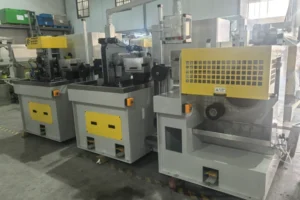
I. Working Principle of Metal Flat Wire Rolling Mill
The core function of a metal flat wire rolling mill is to reshape metal wire through controlled pressure and plastic deformation, without compromising the material’s mechanical properties. The process involves three key stages, each optimized for precision:
1. Multi-Stage Rolling Process
The production workflow begins with raw metal wire (round or pre-formed) loaded onto a pay-off unit, which feeds the wire into the rolling mill at a stable tension. The wire then passes through a series of paired rollers (typically 2Hi or 4Hi configurations) with gradually reducing gaps—each pass compressing the wire to incrementally form the desired flat or rectangular shape . This multi-stage approach ensures uniform deformation, preventing material stress or surface defects. For high-precision applications, modern mills like the CRM-2024 adopt tandem rolling lines with 3-4 stands, achieving thickness reduction of 15-25% per pass while maintaining dimensional consistency .
2. Precision Pressure Control
Pressure regulation is the cornerstone of flat wire quality. Advanced rolling mills use servo-driven systems (e.g., Siemens/Beckhoff controllers) to adjust roller pressure in real time, ensuring the metal undergoes consistent plastic deformation . Too much pressure can cause wire warping or edge “ears,” while insufficient pressure leads to uneven thickness. High-end models integrate laser measuring systems with 0.001mm resolution, forming a closed-loop control that dynamically adjusts pressure to meet tolerance requirements—critical for aerospace and automotive components where ±0.001mm accuracy is non-negotiable .
3. Cooling & Lubrication Systems
Rolling generates significant heat due to friction and plastic deformation, which can alter the metal’s microstructure and mechanical properties. To mitigate this, metal flat wire rolling mills are equipped with two key systems:
- Cooling System: Emulsion or water-based coolants circulate around the rollers and wire, maintaining the material’s temperature below its recrystallization point (especially critical for cold rolling). This preserves the metal’s strength and ductility, ensuring the finished flat wire meets mechanical performance standards .
- Lubrication System: High-performance lubricants reduce friction between the rollers and wire, preventing surface scratches and extending roller lifespan. Centralized lubrication systems (standard in modern mills) automate oil delivery to bearings and roller assemblies, minimizing maintenance downtime .
II. Types of Metal Flat Wire Rolling Mills: Choosing the Right Solution
Metal flat wire rolling mills are classified based on processing temperature, configuration, and production scale. Each type is tailored to specific application requirements:
1. Hot Rolling Mill
- Operating Principle: Rolling is performed at temperatures above the metal’s recrystallization point (e.g., 1,100-1,250°C for steel), which softens the material and reduces deformation resistance .
- Key Advantages: High production efficiency (ideal for mass production), lower energy consumption per unit, and cost-effectiveness for thick flat wires (thickness >5mm).
- Typical Applications: Structural steel for construction (beams, reinforcement bars), heavy-duty automotive components (chassis frames), and large-diameter industrial pipes .
- Limitations: Rougher surface finish (Ra >1.6μm) and wider dimensional tolerances (±0.1mm), making it unsuitable for high-precision applications.
2. Cold Rolling Mill
- Operating Principle: Rolling occurs at or near room temperature (below the metal’s recrystallization point), leveraging work hardening to enhance the material’s strength and surface quality .
- Key Advantages: Superior dimensional accuracy (tolerance ±0.001mm), smooth surface finish (Ra ≤0.4μm), and improved mechanical properties (tensile strength increased by 20-40% compared to hot-rolled wire) .
- Typical Applications: Automotive spring clips, aerospace structural parts, electronic components (motor coils), and precision instruments—where tight tolerances and surface quality are critical .
- Notable Features: Modern cold rolling mills (e.g., CRM-2024) integrate contact-type thickness measurement and closed-loop control, supporting multi-shape production (flat, rectangular, square) .
3. Continuous Rolling Mill
- Operating Principle: Multiple rolling stands are arranged in sequence, with each stand completing a specific deformation stage. The wire passes through all stands continuously, eliminating intermediate handling .
- Key Advantages: Exceptionally high production speed (up to 500m/min for copper flat wire), minimal material waste (≤2%), and consistent product quality across large batches .
- Typical Applications: High-volume production of standard-sized flat wires (e.g., electrical copper flat wire for motors, automotive seat components) .
- Configuration Options: Single-stage (for simple shapes) or tandem (for complex profiles), with automatic or manual press-down models to adapt to diverse production needs .
III. Industrial Applications of Metal Flat Wire Rolling Mills
Metal flat wire rolling mills serve as the backbone of multiple high-demand industries, enabling the production of components that require strength, precision, and durability:
1. Construction Industry
- Key Products: Reinforcement flat wires, structural steel bars, and mesh panel wires.
- Requirements: High tensile strength (≥400N/mm²) and corrosion resistance (for outdoor or humid environments).
- Mill Selection: Hot rolling mills for mass-produced structural components; cold rolling mills for precision mesh wires used in high-rise buildings .
2. Automotive Industry
- Key Products: Spring clips, chassis reinforcements, seat components, and electrical connectors.
- Requirements: Tight tolerances (±0.01mm), high fatigue strength, and compatibility with materials like 65Mn spring steel and stainless steel .
- Mill Selection: Cold rolling mills with tandem rolling lines (e.g., CRM-2024) to ensure consistency across millions of components .
3. Aerospace Industry
- Key Products: Aircraft structural parts, engine components, and avionics wiring.
- Requirements: Ultra-high precision (tolerance ±0.001mm), corrosion resistance (for titanium and stainless steel wires), and compliance with AS9100 standards .
- Mill Selection: High-precision cold rolling mills with laser measuring systems and nitrogen-protected annealing to preserve material integrity .
4. Electronics & Electrical Industry
- Key Products: Motor coils, battery tabs, and transformer windings.
- Requirements: Thin thickness (0.01-0.5mm), uniform width, and excellent electrical conductivity.
- Mill Selection: Continuous cold rolling mills with precise tension control to avoid wire breakage during processing .
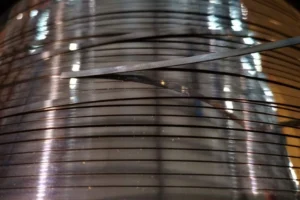
IV. Key Criteria for Purchasing a Metal Flat Wire Rolling Mill
Selecting the right metal flat wire rolling mill requires balancing production needs, quality requirements, and long-term operational costs. Below are the critical factors to consider:
1. Rolling Capacity & Material Compatibility
- Production Volume: Choose a mill with a design speed matching your output needs (30-500m/min). High-volume production (≥10,000kg/day) requires continuous or tandem rolling mills .
- Material Range: Ensure the mill supports your target materials (carbon steel, stainless steel, copper, titanium, or non-ferrous alloys). For example, CRM-2024 processes high-carbon, low-carbon, stainless steel, and titanium wires .
- Size Range: Verify the mill’s thickness (0.5-12mm) and width (2-30mm) capabilities align with your product specifications .
2. Precision & Control Systems
- Tolerance Capability: Select a mill with tolerances matching your application (±0.001mm for precision parts, ±0.1mm for structural components).
- Control Technology: Prioritize mills with advanced controllers (Siemens/Beckhoff), laser measuring systems, and closed-loop feedback—these features ensure consistent quality and reduce human error .
- Roll Quality: Rollers made from carbide steel or sintered metal offer higher precision (roll precision 01mm) and longer service life .
3. Operational Costs & Maintenance
- Energy Efficiency: Opt for mills with energy-saving motors and variable frequency drives (VFD) to reduce power consumption by 15-30%.
- Maintenance Requirements: Choose equipment with easy access to rollers, centralized lubrication systems, and minimal tooling changes—reducing maintenance downtime by 40% .
- Service Life: Rollers and bearings are critical wear parts; select a mill with durable components (e.g., sealed bearings) to extend service life to 10+ years .
4. After-Sales Service & Support
- Supplier Expertise: Partner with manufacturers with a proven track record (e.g., 10+ years in wire processing equipment) and experience in your industry.
- Support Package: Ensure access to on-site installation, technical training, spare parts, and 24/7 remote support—critical for minimizing production disruptions .
- Compliance & Certification: Verify the mill meets international standards (ISO 9001, CE) and industry-specific requirements (IATF 16949 for automotive) .
V. Maintenance & Upkeep of Metal Flat Wire Rolling Mills
Proper maintenance is essential to preserve the mill’s precision, extend service life, and reduce operational costs. Follow this best-practice schedule:
1. Daily Maintenance
- Cleaning: Remove metal chips, dust, and emulsion residue from rollers, guides, and measuring systems to prevent surface defects .
- Lubrication: Check oil levels in the central lubrication system and replenish as needed—ensure rollers and bearings are fully lubricated.
- Visual Inspection: Check for abnormal noise, vibration, or temperature rise in motors and rolling stands.
2. Weekly Maintenance
- Roller Inspection: Measure roller wear and check for scratches or deformation—replace rollers if wear exceeds 0.01mm.
- Tension Control Calibration: Verify the pay-off and take-up units maintain stable tension (±5% variation is acceptable).
3. Monthly/Quarterly Maintenance
- Control System Calibration: Calibrate laser measuring systems and pressure sensors to ensure accuracy.
- Cooling System Maintenance: Clean coolant filters and check for leaks—replace coolant every 6 months.
4. Annual Maintenance
- Comprehensive Inspection: Disassemble and inspect bearings, gears, and servo systems—replace worn components.
- Software Update: Update PLC software to access new features and performance optimizations .
VI. Development Trends of Metal Flat Wire Rolling Mills
As industrial manufacturing evolves toward automation, intelligence, and sustainability, metal flat wire rolling mills are following three key trends:
1. Full Automation
Modern mills integrate robotic loading/unloading, automatic tool change, and inline inspection systems—reducing human intervention by 80% and improving production consistency. Tandem rolling lines with automatic gap adjustment (e.g., AGC control) enable 24/7 unattended operation .
2. Intelligent Monitoring & Predictive Maintenance
- IoT Integration: Sensors track roller wear, motor temperature, and energy consumption in real time, sending data to a cloud platform for analysis.
- Predictive Maintenance: AI algorithms predict equipment failures (e.g., bearing wear) 2-3 weeks in advance, reducing unplanned downtime by 50% .
- Data-Driven Optimization: Production data (speed, pressure, tolerance) is analyzed to optimize process parameters, improving yield by 10-15% .
3. Environmental Protection & Energy Saving
- Energy-Efficient Design: Motors with IE5 efficiency ratings and regenerative braking systems reduce energy consumption by 20-30%.
- Eco-Friendly Lubricants: Water-based emulsions replace oil-based lubricants, minimizing environmental impact.
- Material Waste Reduction: Precision control systems and multi-stage rolling reduce material waste to ≤2%, aligning with sustainable manufacturing goals .
Conclusion
Metal flat wire rolling mills are the cornerstone of precision metal processing, enabling the production of critical components across construction, automotive, aerospace, and electronics industries. By understanding their working principle, types, applications, and selection criteria, manufacturers can choose equipment that balances precision, efficiency, and cost-effectiveness. With the industry moving toward automation, intelligence, and sustainability, investing in advanced mills (equipped with closed-loop control, IoT sensors, and energy-saving features) is key to staying competitive. Proper maintenance and partnering with reliable suppliers further ensure long-term operational success. As technology advances, metal flat wire rolling mills will continue to evolve, empowering manufacturers to meet the growing demand for high-quality, high-precision flat wire in the global market.