Introduction
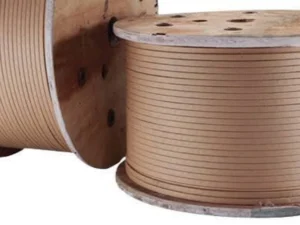
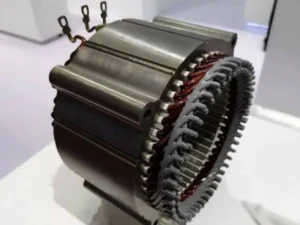
In power grids, industrial plants, and building wiring systems, aluminum conductors often exhibit uneven diameter, surface defects, or reduced tensile strength, caused by improper microstructure control and stress during rolling. In production, these issues can be effectively mitigated through precise thickness control, uniform tension, and optimized roll design. The CRM Aluminum Strip Rolling Mill 2026 addresses these challenges with precision-engineered tungsten carbide rolls, grooved rolling surfaces, and automated tension and roll-gap control. Multi-stand configurations allow fine-tuned reductions, maintaining ductility and strength across alloys like AA1350, AA5182, and AA6201, while integrated cooling and lubrication ensure surface integrity. By streamlining rolling and wire drawing, the CRM Aluminum Strip Rolling Mill 2026 reduces waste, enhances straightness and finish, and delivers conductors that consistently meet rigorous electrical and mechanical standards.
Typical Transmission Conductor Dimensions and Applications
| Conductor Type | Wire Diameter Range | Typical Applications | Industry |
| High-Strength Aluminum Alloy Conductors | 5 mm – 12 mm | Long-span transmission lines, river crossings | Power Infrastructure |
| Ultra-Low Sag Conductors | 10 mm – 18 mm (aluminum matrix composite) | High-temperature, high-load grid corridors | Energy & Utilities |
| High-Conductivity Conductors | 3 mm – 8 mm | Urban power distribution, substation wiring | Electrical Equipment |
Challenges in Producing Aluminum Transmission Wires
- Maintaining Dimensional Accuracy
Aluminum transmission wires require extremely precise dimensions to ensure consistent electrical performance. Any slight variation in thickness or diameter can lead to uneven current distribution, increased resistance, and reduced mechanical strength, which can compromise overall reliability.
- Controlling Material Microstructure
The microstructure of aluminum alloys (such as AA1350 or AA6201) significantly affects conductivity, tensile strength, and corrosion resistance. Achieving a uniform microstructure during production is essential to prevent weak points, brittleness, or premature failure under mechanical or environmental stress.
- Ensuring Surface Quality
Surface defects like scratches, cracks, or oxides can reduce the wire’s conductivity and longevity. High-quality surface finishing is critical not only for performance but also for proper bonding in aluminum-clad components or overhead line connections.
- Managing Corrosion and Environmental Stress
Aluminum is prone to oxidation and corrosion, especially in harsh weather conditions. Protective coatings, alloying elements, and careful handling during manufacturing are vital to minimize degradation over time.
- Balancing Mechanical Strength and Conductivity
Aluminum wires must maintain an optimal balance between tensile strength and electrical conductivity. Excessive strengthening can reduce conductivity, while prioritizing conductivity alone can compromise mechanical robustness.
Our Solutions and Process Optimization
Precision Rolling Techniques
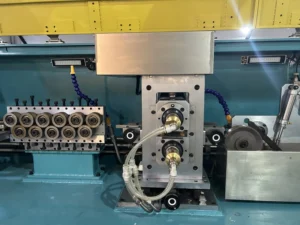
The CRM 2026 uses multi-stand, high-precision rolling with closed-loop roll gap control and real-time tension profiling. Thickness tolerances reach ±0.008 mm on strips up to 600 mm wide. Key features:
- Hydraulic AGC with 0.001 mm resolution
- Work roll bending and shifting to counter thermal and wear effects
- Multi-zone induction preheating to prevent edge waves and center buckles
Controlled Annealing and Material Conditioning
Inline continuous annealing between rolling passes ensures uniform mechanical properties while reducing inventory by 40%. Features include:
- Nitrogen-hydrogen atmosphere to prevent oxidation
- ±3°C temperature uniformity across the strip
- Real-time conductivity monitoring to ensure complete recrystallization
Surface Protection Strategies
Advanced closed-loop lubrication and cleaning protect aluminum surfaces without causing roll marks. Highlights:
- Precision air-mist lubrication with programmable flow
- High-pressure cleaning with 5 µm filtration
- Online laser inspection for scratches or particles ≥20 µm
Alloy-Adaptive Rolling Schedules
A built-in alloy library adjusts reductions, tensions, and annealing for specific grades (1350, 6101, 6201, 8000 series). Examples:
- High-strength alloys: conservative reductions, higher tension to maintain flatness
- Pure aluminum: aggressive reductions for throughput
- Heat-resistant alloys: low-speed rolling to prevent edge cracking
By combining precise gauge control, inline annealing, active surface protection, and alloy-adaptive schedules, the CRM 2026 solves the main causes of conductor strip rejection, boosting quality and efficiency in overhead and flexible conductor production.
Resulting Benefits in Conductor Performance
The CRM 2026 ensures uniform cross-sections, eliminating strip waviness and gauge variations that can cause breakage, poor weld quality, or uneven wire drawing. Controlled annealing and microstructure management enhance mechanical strength and prevent cracking under tension, while advanced surface protection delivers smooth, defect-free strips for longer service life. Alloy-adaptive rolling schedules minimize edge cracking and segregation, reducing scrap by up to 12%, and overall process optimization boosts production efficiency while maintaining superior electrical conductivity.
Conclusion
Aluminum strip rolling is a critical step in producing high-performance conductors for overhead transmission lines and flexible cables. Key challenges—including precise thickness control, surface defect prevention, and alloy-specific deformation behavior—must be addressed to ensure reliable electrical performance and long-term mechanical durability. By integrating advanced rolling techniques with precise material handling, stress management, and real-time process control, manufacturers can produce conductors that consistently meet stringent international standards (such as ASTM, IEC, and EN) while maximizing production efficiency and minimizing material waste.
The CRM Aluminum Strip Rolling Mill 2026 is purpose-built to solve these challenges. With closed-loop Automatic Gauge Control (AGC) achieving ±0.008 mm thickness tolerance, inline controlled annealing for uniform mechanical properties, and alloy-adaptive rolling schedules that prevent edge cracking and surface defects, our system delivers conductor-quality strip with unmatched consistency. Whether processing high-strength 6201 alloys for overhead lines or pure 1350 aluminum for flexible cables, the CRM 2026 transforms rolling from a process variable into a competitive advantage.
Ready to elevate your wire production? Contact Sky Bluer Environmental Technology today to explore custom solutions tailored to your manufacturing needs.