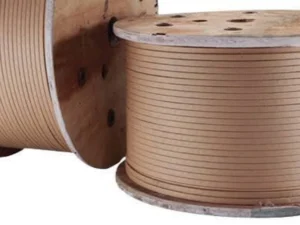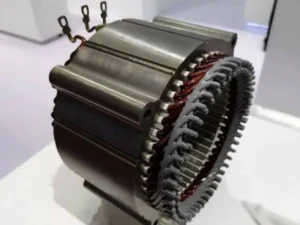
Wedge wire is produced via a specialized process, creating wire screens, panels, tubes, and cylinders with a distinct wedge-shaped profile. These products are widely utilized across filtration, separation, dewatering, and architectural design applications.
1. Material & Profile Selection
The wedge-shaped profile is customized to meet specific application needs. It features narrow slots that allow fluids or fine particles to pass through while trapping larger solid materials.
To design the optimal profile:
- Define geometry and dimensions based on the size of target particles or fluids.
- Prioritize a design that minimizes turbulence and prevents clogging.
2. Wire Forming: Rolling & Drawing Process
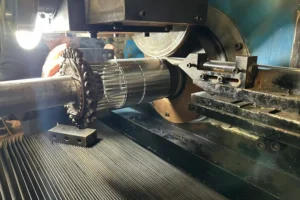
After raw material selection, our rolling mill transforms round wire into wedge wire through a precise 5-step process:
- Match the closest round wire size to the finished product’s specifications.
- Rough-roll wire rods into a preliminary wedge shape; adopt continuous rolling if feasible.
- Apply hydrogen annealing (duration adjusted based on material volume).
- Finish rolling via one of three methods: continuous rolling, die drawing, or special-shaped die processing.
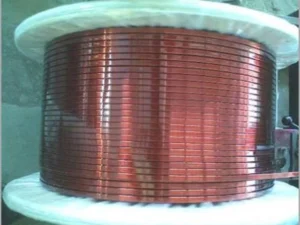
- Prepare finished products as coiled material, or straighten and cut them per delivery requirements.
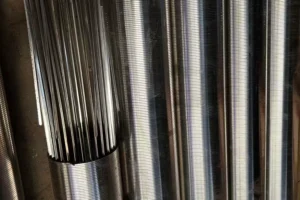
3. Stainless Steel Wedge Wire Production Line
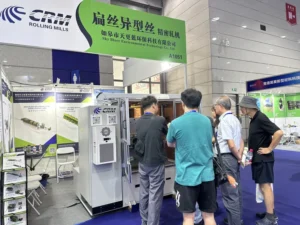
Our advanced stainless steel wedge wire production line delivers tailored solutions for all your wire manufacturing needs.
Key Components of an Advanced Production Line
A state-of-the-art edge wire production line includes the following integrated components, each working in sync to ensure efficiency and quality:
- Automatic Payoff Unit: Feeds the round wire blank into the line at a constant speed, maintaining tension to prevent tangling or stretching.
- Rough Rolling Mills: Custom-configured rolls for preliminary wedge shaping, with adjustable pressure to accommodate different materials and profiles.
- Hydrogen Annealing Furnace: Computer-controlled temperature and atmosphere regulation to ensure consistent annealing results.
- Finish Rolling/Drawing Station: Specialized equipment for final profile refinement—either continuous rolls for high volume or custom dies for specialty profiles.
- Online Measurement System: Real-time laser monitoring of width, depth, slot size, and surface quality, with automatic adjustments to the rolling/drawing process if deviations are detected.
- Tension Control Systems: Multiple tension dancers placed throughout the line to maintain consistent wire tension, preventing deformation or breakage.
- Cooling & Lubrication System: Spray-on coolants and lubricants that reduce friction during forming, prevent overheating, and protect the wire’s surface.
- Cleaning & Surface Treatment Station: Removes lubricants and debris, with optional passivation or polishing for enhanced corrosion resistance.
- Automatic Coiling/Cutting Unit: Winds the finished wire into coils or cuts it to custom lengths, with precise tension control to ensure neat, uniform packaging.
- PLC Control System: Centralized automation that coordinates all components, allowing operators to set parameters (speed, temperature, dimensions) and monitor production in real time.