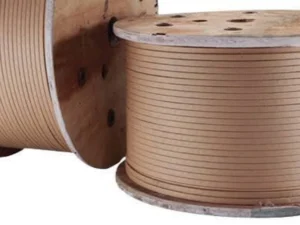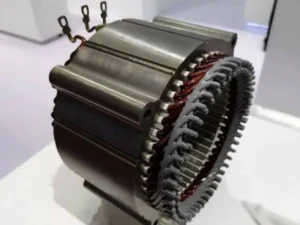
Wedge-shaped wires—also known as triangular wires—are specialized metal profiles with a tapered cross-section, designed to deliver precise separation and filtration performance. These wires are the core components of industrial filters, screen panels, sieves, and mining screens, where their unique geometry creates uniform gaps for efficient particle retention while resisting clogging. Behind the production of these high-precision wires lies a range of specialized metal forming equipment, each tailored to different production volumes, material types, and profile complexity. This article explores the core technology of wedge-shaped wire forming, the common types of equipment, production line configurations, and key considerations for selecting the right solution—uncovering how these technologies power critical filtration systems across industries.
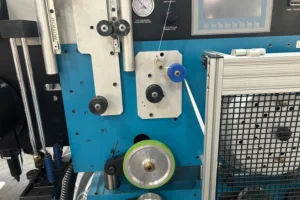
Understanding Wedge-Shaped Wires: Key Characteristics & Industrial Roles
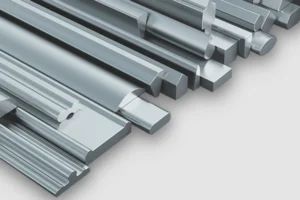
Wedge-shaped wires stand out for their distinct cross-sectional design, which combines structural stability, filtration efficiency, and durability. Unlike round or rectangular wires, their tapered profile (wider base, narrower top) offers unique advantages that make them indispensable in filtration-centric industries.
Core Advantages of Wedge-Shaped Wires
The wedge geometry delivers performance benefits that align with industrial filtration needs:
- Precision Filtration Gaps: The uniform spacing between wedge wires (created by their tapered shape) ensures consistent particle separation, critical for applications like chemical processing and oil/gas well screens.
- Clog-Resistant Design: The smooth, tapered surface minimizes debris buildup, reducing maintenance frequency and extending the service life of filters and screens.
- Structural Strength: The wedge shape provides higher load-bearing capacity compared to round wires, making them suitable for heavy-duty applications like mine screens and industrial sieves.
- Corrosion Resistance: When processed from stainless steel or alloy steel, wedge wires withstand harsh environments (e.g., chemical exposure, high humidity) common in filtration scenarios.
Key Application Industries
Wedge-shaped wires are widely used across sectors that demand reliable filtration and separation:
- Mining & Mineral Processing: Mine screens for ore classification and particle separation.
- Oil & Gas: Well screens for sand control and fluid filtration in drilling operations.
- Chemical & Petroleum: Industrial filters for chemical processing, refining, and fluid purification.
- Water Treatment: Screens for wastewater filtration and water purification systems.
- Food & Pharmaceutical: Precision sieves for product grading and contamination control.
Common Types of Wedge-Shaped Wire Metal Forming Equipment
Wedge-shaped wire production relies on specialized metal forming equipment, each designed to transform raw metal wire (round, flat, or square) into the desired wedge profile. The choice of equipment depends on factors like production volume, profile complexity, and material type.
1. Specialized Roll Forming Machines
The most widely used equipment for high-volume wedge wire production, specialized roll forming machines use contour-designed forming rolls to shape metal wire through continuous cold rolling:
- Working Principle: The wire passes through a series of sequentially arranged rolls, each modifying the cross-section incrementally until the final wedge shape is achieved.
- Key Features: High production efficiency (suitable for mass manufacturing), consistent dimensional accuracy, and compatibility with materials like low carbon steel, stainless steel, and alloy steel.
- Variations: Standard models for common wedge profiles, custom-modified versions for unique tapered designs.
2. Wire Drawing Machines
Ideal for producing wedge wires with tight dimensional tolerances, wire drawing machines use progressive diameter reduction and profile shaping:
- Working Principle: The raw wire (round, flat, or square) passes through multiple sets of custom-designed drawing dies. Each die reduces the wire’s size while reshaping its cross-section into a wedge profile.
- Key Features: Excellent precision (supports thickness tolerances as tight as ±0.003mm), suitable for small to medium production volumes, and compatibility with precious metals and high-strength alloys.
- Application Fit: Precision filtration systems and small-scale custom wedge wire production.
3. Wedge Wire Screen Welding Machines
Dedicated equipment for manufacturing finished wedge wire screens (not just wires), these machines integrate forming and welding:
- Composition: Custom welding platform + welding transformer + electrode system.
- Working Principle: Wedge wires are fed into the machine, and electrodes perform spot welding at fixed intervals to attach them to support rods, forming a complete screen panel.
- Key Features: Specialized for screen production, high welding precision, and integration with forming processes for end-to-end manufacturing.
4. Wire Forming & Bending Machines
Versatile equipment that can process wedge wires alongside other profiles (e.g., square, rectangular):
- Key Features: Interchangeable tooling (bending dies, forming rollers), available in manual, semi-automatic, and fully automatic models.
- Application Fit: Low to medium production volumes, mixed-profile manufacturing, and small-batch custom orders.
5. CNC Machining Centers
Suitable for complex, customized wedge-shaped wire profiles that cannot be achieved with rolling or drawing:
- Working Principle: Computer-controlled milling and cutting tools shape the wire into intricate triangular/wedge designs with high precision.
- Key Features: Extreme flexibility for unique profiles, high dimensional accuracy, and suitability for low-volume, high-complexity production.
- Application Fit: Specialized filtration systems, aerospace components, and custom-engineered wedge wires.
6. Pre-Processing Equipment: Flattening Machines
Essential auxiliary equipment for wedge wire cold forming:
- Role: Flattens raw wire (e.g., round steel φ16mm, square steel 16×16mm) into a uniform flat base, preparing it for subsequent wedge shaping.
- Key Features: Ensures consistent thickness of the wire’s base, improving the precision of the final wedge profile.
Technical Specifications of Wedge-Shaped Wire Forming Equipment
The performance of wedge-shaped wire forming equipment is defined by its technical parameters, which determine its capability to process different materials, achieve precise dimensions, and meet production demands. Below are the core specifications to consider:
| Parameter Category | Key Specifications |
| Machining Precision | Finishing grade quality; thickness tolerance ±0.003mm, width tolerance ±0.01mm |
| Processable Materials | Low carbon steel, alloy steel, stainless steel, black iron wire |
| Raw Material Specs | Flat steel: 40×10mm; Round steel: φ16mm; Square steel: 16×16mm |
| Power Requirements | Total power ≤5kw; Rated power: 3.7kw |
| Control Mode | Full computer control for automated operation |
| Production Capacity | Varies by equipment type (high-volume for roll forming, low-volume for CNC) |
| Machine Dimensions | Standard model: 1060 × 670 × 1160mm (L×W×H) |
| Weight | Net weight: 1560kg; Gross weight: 1680kg |
| Customization | Available for profile design, material compatibility, and production volume |
Wedge-Shaped Wire Production Line Configurations
Wedge-shaped wire production typically involves an integrated line of equipment, tailored to the target application (e.g., screen mesh, mine screens). Below are two standard production line setups:
1. Production Line for Screen Mesh & Filter Industry (Chemical & Petroleum)
This line is optimized for manufacturing wedge wire screens used in chemical processing and oil/gas filtration:
- Automatic Pay-Off Machine: Feeds raw wire into the line at a steady, controlled rate.
- Turkish Rolling Mill: Performs initial shaping to refine the wire’s cross-section.
- Tension Control System: Maintains consistent tension to prevent wire deformation.
- Cooling & Lubricating Device: Dissipates heat generated during cold rolling and reduces friction.
- Traction Device: Pulls the wire through the line at a synchronized speed.
- Wire Diameter Measurement System: Real-time monitoring of dimensions to ensure tolerance compliance.
- Precision Wire Take-Up & Discharging System: Collects the finished wedge wire into coils for storage or further processing.
2. Production Line for Mine Screens
This line is designed for heavy-duty wedge wires used in mining and mineral processing:
- Automatic Pay-Off Machine: Feeds raw wire (e.g., round steel φ16mm) into the line.
- Two-High Flat Rolling Mill: Flattens the raw wire into a uniform base (pre-processing step).
- Turkish Rolling Mill: Shapes the flattened wire into the final wedge profile.
- Tension Control System: Prevents slack or overstretching during processing.
- Cooling & Lubricating Device: Protects the wire from overheating and reduces tool wear.
- Traction Device: Ensures consistent line speed.
- Wire Diameter Measurement System: Verifies dimensional accuracy.
- Precision Wire Take-Up & Discharging System: Collects the finished wedge wire for screen assembly.
How to Select the Right Wedge-Shaped Wire Forming Equipment
Choosing the optimal metal forming equipment for wedge-shaped wire requires aligning equipment capabilities with production needs, material properties, and profile specifications. Below are the key selection criteria:
1. Define Material & Profile Requirements
- Material Type: Select equipment compatible with your raw material (e.g., stainless steel requires corrosion-resistant tooling; high-strength alloys need robust rolling/drawing systems).
- Profile Complexity: Standard wedge profiles can be produced with roll forming or drawing machines; complex, custom shapes require CNC machining centers.
- Dimensional Tolerances: High-precision applications (e.g., pharmaceutical filtration) demand equipment with tight tolerance control (±0.003mm), such as wire drawing machines or CNC centers.
2. Match Equipment to Production Volume
- High-Volume Production: Specialized roll forming machines or continuous production lines (e.g., mine screen line) offer the best efficiency.
- Medium-Volume Production: Wire drawing machines or semi-automatic forming & bending machines balance speed and flexibility.
- Low-Volume/Custom Production: CNC machining centers or manual forming machines are cost-effective for small batches and unique designs.
3. Consider Automation & Control Needs
- High Automation: Fully computer-controlled equipment (e.g., roll forming machines with CNC control) reduces human error, improves consistency, and suits large-scale production.
- Flexibility: Semi-automatic or manual machines are ideal for mixed-profile production or frequent setup changes.
4. Evaluate Equipment Compatibility
- Production Line Integration: Ensure the equipment can be integrated into your existing line (e.g., pre-processing flattening machines, post-processing welding equipment for screens).
- Auxiliary Systems: Verify compatibility with cooling, lubrication, and measurement systems to maintain quality and efficiency.
5. Prioritize Reliability & Customization
Customization Support: Work with manufacturers that offer tailored solutions for unique profile designs, material compatibility, or production volume needs.
Durability: Choose equipment with robust construction (e.g., hardened steel rolls, corrosion-resistant components) for long-term use.
Conclusion
Wedge-shaped wire metal forming equipment is the backbone of industrial filtration systems, enabling the production of high-precision, durable wires that power critical applications in mining, oil & gas, chemical processing, and water treatment. From high-volume roll forming machines to custom CNC machining centers, each equipment type is designed to address specific production needs—balancing precision, efficiency, and flexibility. By understanding the core technology of these machines, their technical capabilities, and selection criteria, manufacturers can optimize their production processes to deliver wedge-shaped wires that meet strict industry standards. As filtration demands grow more stringent (e.g., finer particle separation, harsher operating environments), the role of advanced wedge-shaped wire forming technology will only become more critical in driving industrial efficiency and sustainability.