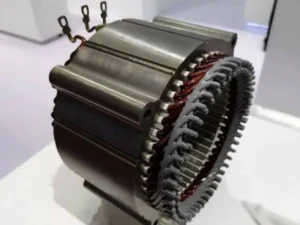
Flat wire is everywhere—from the springs in your car’s suspension to the connectors in your smartphone, the filters in industrial machinery, and even the jewelry on your shelf. This versatile metal component, defined by its uniform thickness, fixed width, and smooth surface, is the backbone of countless products across industries. But have you ever wondered how round wire or metal strips are transformed into the precise flat wire that powers these applications? The answer lies in precision flat wire manufacturing—a specialized process that balances mechanical engineering, material science, and intelligent control to deliver consistent, high-quality results.
In this blog, we’ll take a deep dive into precision flat wire manufacturing, exploring the core technology, key components that make it possible, and the wide range of industries that rely on this critical process. Whether you’re a manufacturer looking to optimize production or simply curious about the science behind everyday metal parts, this guide will demystify how flat wire goes from raw material to finished product.
The Basics of Precision Flat Wire Manufacturing
At its core, precision flat wire manufacturing is the process of transforming round wire or metal strips into flat, uniform profiles with tight dimensional tolerances. Unlike basic metal bending or hammering, this process requires controlled pressure, precise alignment, and consistent tension to ensure the finished wire maintains a uniform thickness across its entire width—critical for applications where performance depends on structural integrity or electrical conductivity.
The foundation of precision flat wire manufacturing is a set of specialized tools and systems working in harmony. While the exact setup varies by industry and product requirements, the process typically relies on six core components, each playing a vital role in delivering the final product’s quality.
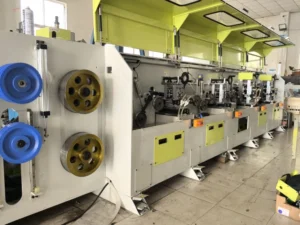
Key Components of Precision Flat Wire Manufacturing
To achieve the accuracy and consistency demanded by modern industries, precision flat wire manufacturing relies on these essential elements:
1. High-Precision Forming Rolls
The heart of the process is a set of forming rolls—usually made from hardened steel or carbide to resist wear and maintain shape over thousands of production cycles. These rolls are precision-machined to be perfectly cylindrical (or custom-profiled for specialty flat wires) and aligned to ensure even pressure across the material. As round wire or metal strip passes through the gap between the rolls, the controlled pressure flattens it to the desired thickness while preserving its width. For specialty applications, rolls can be custom-shaped to produce flat wire with natural angles, rounded edges, or other unique profiles.
2. Adjustable Gap Control Systems
No two flat wire projects are the same—thickness requirements can range from micrometers to millimeters, depending on the application. Precision flat wire manufacturing systems include advanced gap control mechanisms that let operators fine-tune the distance between the forming rolls. These systems can be manual (for small-batch production), hydraulic (for high-pressure applications), or motorized (for automated, high-volume runs). The ability to adjust the gap with precision ensures that each batch of flat wire meets exact dimensional specifications, reducing waste and ensuring consistency.
3. Stable Drive & Speed Control
Consistent speed is critical for uniform flattening. Precision flat wire manufacturing uses industrial-grade electric motors paired with reliable transmission systems to power the forming rolls at a steady pace. Most modern systems offer adjustable speed control, allowing operators to match the speed to the material (e.g., softer metals like copper require slower speeds than hardened steel) and the desired finish. Stable speed prevents material stretching, warping, or uneven thickness, ensuring that every meter of flat wire meets the same quality standards.
4. Tension Management Mechanisms
Imagine trying to flatten a piece of wire that slips or wrinkles as it moves through the rolls—you’d end up with a uneven, unusable product. That’s why precision flat wire manufacturing includes built-in tension control systems. These mechanisms maintain a steady feeding tension throughout the process, preventing the material from slipping, wrinkling, or deforming. By keeping the wire taut but not stretched, tension control ensures even feeding, stable traction, and uniform flatness across the entire width of the finished product. This is especially important for thin flat wire used in electronics or medical devices, where even minor irregularities can cause failures.
5. Cooling & Lubrication Solutions
Flattening metal generates friction and heat—left unchecked, this heat can damage the forming rolls, degrade the material’s properties, or ruin the flat wire’s surface finish. Precision flat wire manufacturing systems address this with professional cooling and lubrication systems. These systems spray a specialized lubricant onto the rolls and material, reducing friction, dissipating heat, and protecting both the rolls and the wire. The result? Extend roll life, improved surface finish (no scratches or oxidation), and consistent material performance—critical for applications like electrical connectors, where conductivity and surface quality are non-negotiable.
6. Intelligent Control Panels
Modern precision flat wire manufacturing is all about repeatability and efficiency. That’s why today’s systems feature intuitive control interfaces that let operators set and monitor core parameters—roll gap, speed, tension, and cooling—to ensure precise, consistent results. Many systems include built-in monitoring and feedback functions that alert operators to deviations (e.g., a sudden change in thickness) and even make automatic adjustments to correct them. This level of intelligent control is essential for mass production, where even small errors can lead to significant waste or compromised product quality.
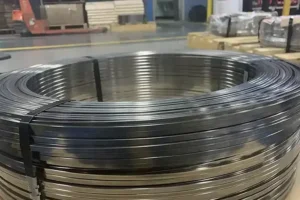
Industries That Rely on Precision Flat Wire Manufacturing
Precision flat wire is a versatile component that powers industries ranging from electronics to aerospace. Here are some of the key sectors that depend on high-quality flat wire:
- Electronics & Electrical Engineering: Flat wire is used in electrical connectors, flexible printed circuits (FPCs), inductors, and transformers. Its thin profile and uniform thickness make it ideal for compact devices, while its high conductivity (when made from copper or aluminum) ensures efficient power transmission.
- Automotive Manufacturing: Cars and trucks rely on flat wire for springs (e.g., suspension springs, seat springs), sensors, and electrical systems. The process’s ability to produce strong, durable flat wire ensures that these components can withstand the rigors of daily use.
- Jewelry Making: Artisans use flat wire to create necklaces, bracelets, and earrings. Precision flat wire manufacturing delivers consistent thickness and smooth surfaces, making it easy to shape, bend, and solder into intricate designs.
- Industrial Filtration: Flat wire is a key component of metal mesh and filter screens used in mining, water treatment, and chemical processing. Its uniform width and thickness create consistent gaps for filtration, while its durability resists corrosion and wear.
- Medical Devices: Thin, precise flat wire is used in catheters, stents, and surgical instruments. The process’s ability to produce flat wire with micrometer-level tolerances ensures that these life-saving devices are safe, reliable, and compatible with the human body.
- Aerospace: Aircraft and spacecraft use flat wire for lightweight structural components, electrical systems, and fuel cells. Precision flat wire manufacturing delivers the strength-to-weight ratio and dimensional accuracy required for these high-stakes applications.
Why Precision Matters in Flat Wire Manufacturing
In industries where performance, safety, and reliability are critical, precision flat wire manufacturing isn’t just a nice-to-have—it’s a necessity. Here’s why:
- Consistency Reduces Waste: By producing flat wire with tight tolerances, manufacturers minimize scrap and rework, lowering production costs and improving efficiency.
- Performance Depends on Accuracy: For electrical connectors, a slight variation in thickness can reduce conductivity. For springs, uneven flatness can lead to inconsistent tension. Precision ensures that flat wire performs as intended.
- Durability & Longevity: High-quality flat wire—produced with controlled pressure, proper cooling, and stable tension—resists wear, corrosion, and deformation, extending the lifespan of the products it powers.
- Versatility Enables Innovation: Precision flat wire manufacturing can produce custom profiles and sizes, allowing engineers to design smaller, lighter, more efficient products.
The Future of Precision Flat Wire Manufacturing
As industries like electronics, automotive, and medical devices continue to demand smaller, more efficient components, precision flat wire manufacturing is evolving to meet these needs. Innovations like AI-powered quality control (which can detect even microscopic defects), advanced roll materials (for longer service life), and fully automated production lines (for 24/7 efficiency) are shaping the future of the process. Additionally, the shift toward sustainable manufacturing is driving the development of eco-friendly lubricants and energy-efficient systems, making precision flat wire production more environmentally friendly.