The Precision Transformation of Industrial Wire: Unveiling the Core Processing Solutions Powering Multiple Industries
When you look at the precision springs in a car engine, the tiny wires in electronic devices, or the high-strength steel reinforcement in buildings, you might not realize—these metal wires of varying shapes and stable performance all originate from a highly efficient processing system. In the metalworking industry, there’s an “unsung hero” that transforms heavy metal billets into wire products with precise diameters, smooth surfaces, and tailored properties, silently supporting the development of dozens of sectors including automotive, aerospace, electronics, and medical.
Today, we’ll lift the veil on this processing system, exploring the core logic of “wire forming” in industrial production, the key equipment combinations, and how it meets the customized needs of diverse industries through precise control.
More Than Just “Thinning”: The Core Demands of Industrial Wire Processing
Many people think wire processing is just “stretching metal rods thinner,” but in reality, modern industry has far higher requirements for wires:
- Dimensional Precision: For some electronic or medical wires, the diameter tolerance must be controlled within 0.005mm—equivalent to 1/10 the thickness of a human hair;
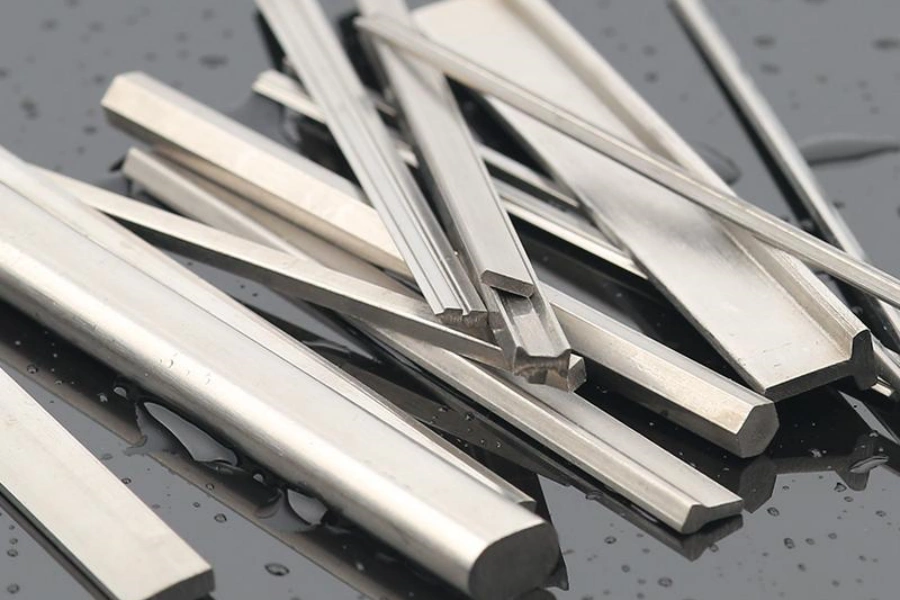
- Shape Versatility: Beyond common round wires, there are square, triangular, flat, and other special cross-sectional wires to fit different assembly scenarios;
- Surface Quality: A smooth, uniform, burr-free surface is essential to ensure subsequent assembly, conductivity, or corrosion resistance;
- Mechanical Stability: From automotive shock absorber springs to building reinforcement, wires must possess stable tensile strength, compressive strength, elasticity, and other properties.
The core of meeting these demands is an integrated “precision wire processing system”—not a single machine, but a complete solution combining “raw material handling, forming processing, surface optimization, and finished product coiling.”
The “Golden Combination” of Processing Systems: Key Equipment Working in Synergy
A mature industrial wire processing system relies on the collaboration of three core equipment categories, with each link directly affecting the final product quality:
Payoff Equipment: The “Starting Point” of Stable Output
As the first step in processing, the core function of payoff equipment is “stability and no tension fluctuation.” Adopting a horizontal payoff + active payoff structure, it is specifically designed for 16–40mm hot-rolled or cold-rolled steel wires. It prevents raw materials from twisting or scratching during payoff, laying a solid foundation for subsequent processing.
Forming Core: The Transformation from “Rough Billet” to “Precision Wire”
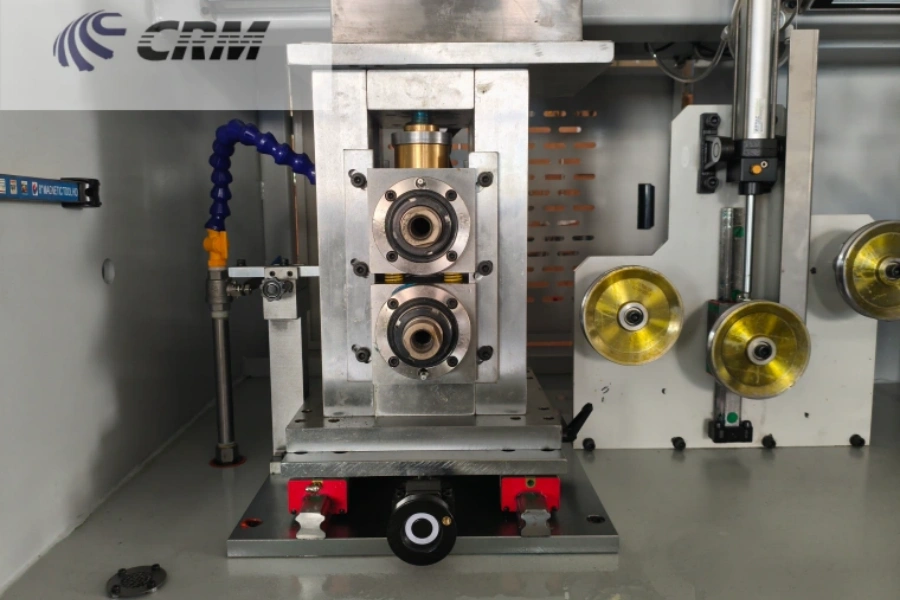
This step is the soul of the entire system and the key to achieving “customization.” Through multiple continuous rolling or drawing processes, it not only precisely reduces the diameter of thick wires but also presses them into non-standard shapes such as flat wires and special-shaped wires through specially designed rolls.
Notably, for special-specification raw materials that are hard to source on the market, the system is equipped with 1–2 wire drawing machines. These first draw large-size round wires into the required intermediate specifications before subsequent rolling—completely solving the industry pain point of “raw material mismatch.”
Surface Treatment & Coiling: Details Determine Final Quality
- Surface Optimization: By combining professional lubricants and coolants with specially coated rolls, the wire surface achieves a “burr-free, uniformly smooth” finish while protecting the metal from damage;
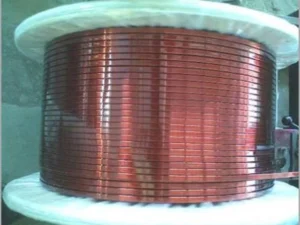
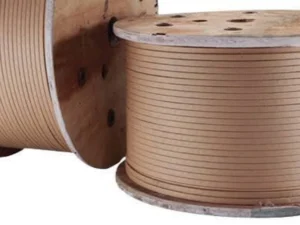
- Automatic Coiling: After processing, the automatic coiling system neatly winds the wire into coils or spools, facilitating subsequent storage, transportation, and preventing tangling or deformation during storage.
Adapting to All Industries: “Customization Capabilities” from Automotive to Medical
The diversity of modern industry requires wire processing systems to have strong adaptability. Through replaceable roll combinations (four-roll design: upper, lower, left, and right—any two rolls can be paired to process special cross-sections), this system can easily handle:
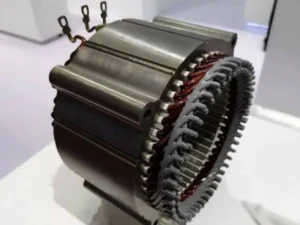
- Automotive Industry: Shock absorber springs, wiring harnesses;
- Aerospace Sector: Lightweight structural component wires;
- Medical Equipment: Precision instrument connection wires;
- Electronics Industry: Microcomponent pins;
- Construction & Mining: High-strength reinforcement, screen wires.
Whether it’s stainless steel triangular wire, square wire, or special alloy flat wire, batch and stable production is achievable with a tolerance control precision of 0.005mm, fully meeting the standards of high-demand industries.
Automation Upgrade: Making Processing More Precise and Efficient
With the advancement of Industry 4.0, wire processing systems are transitioning toward “intelligence.” Today’s high-end processing lines are generally equipped with PLC automatic control systems, precision sensors, and real-time monitoring modules:
- Full-process automated control reduces errors caused by manual intervention;
- Real-time monitoring of wire diameter and surface quality, with immediate adjustments if deviations occur;
- Simple operation, convenient maintenance, and quick roll replacement significantly improve production efficiency.
From manual and semi-automatic to fully automated intelligent production, the upgrading of this system not only reduces enterprise production costs but also elevates product quality stability to new heights.
Conclusion: Wire Processing—Supporting the “Intricacies” of Industrial Manufacturing
Seemingly simple metal wires are actually the “capillaries” of industrial manufacturing—penetrating core products in various fields, their quality directly affects the performance and lifespan of end products. This precision processing system, integrating “payoff, forming, surface optimization, coiling, and intelligent control,” achieves the “from rough to refined” transformation of metal wires through precise control of every detail, providing reliable basic material support for all industries.
In the future, as industries such as new energy and high-end manufacturing continue to develop, requirements for wires will keep rising. The continuously iterated wire processing solutions will continue to serve as the “unsung heroes” of industrial manufacturing, supporting the birth of more innovative products.