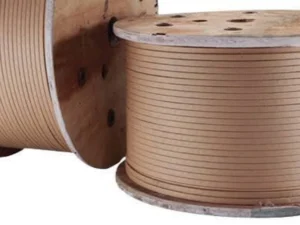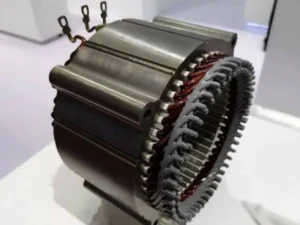
Flat wire is a critical component in industries ranging from solar PV and automotive to electronics and aerospace—demanding precise dimensions, consistent surface quality, and tailored mechanical properties. The key to producing high-quality flat wire lies in selecting the right production machine, as different equipment excels in specific materials, tolerances, and output requirements. Many manufacturers struggle to navigate the diverse options, but understanding the three core flat wire production machines—flat wire rolling mills, Turks head machines, and wire drawing machines with roller dies—is essential for informed decision-making. As a leader in wire processing technology, Sky Bluer Environmental Technology Co., Ltd. (CRM brand) offers specialized solutions for each machine type, tailored to ferrous/non-ferrous metals and high-precision applications. This comprehensive guide breaks down each machine’s function, advantages, applications, and criteria to help you choose the perfect fit.
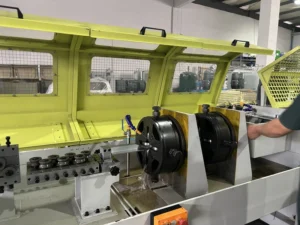
Introduction: Why Choosing the Right Flat Wire Machine Matters
Flat wire production requires equipment that balances precision, efficiency, and material compatibility. Whether you’re manufacturing 0.01mm-thin copper PV ribbons or 12mm-thick stainless steel structural wire, the right machine directly impacts:
- Dimensional accuracy (tolerances as tight as ±0.001 mm for electronics)
- Surface quality (Ra ≤0.4 μm for medical/electrical applications)
- Production efficiency (up to 500 m/min line speed for high-volume runs)
- Material integrity (preserving tensile strength and ductility)
The three primary machines for flat wire production—flat wire rolling mills, Turks head machines, and wire drawing machines—serve distinct roles: rolling mills for primary flattening, Turks head machines for precision shaping, and wire drawing machines for diameter reduction + flattening. Below, we explore each in detail, including CRM’s specialized models and guidance.
1. Flat Wire Rolling Mill: The Primary Flattening Workhorse
Also known as a wire flattening machine or flattener, the flat wire rolling mill is the most versatile and widely used equipment for flat wire production. It transforms round or pre-drawn wire into flat/rectangular profiles through controlled cold/hot rolling, making it ideal for both high-volume and precision-focused applications.
Core Function & Working Principle
- Process: The machine feeds wire through a series of calibrated rollers (2-high or 4-high setups), applying incremental compressive force to reshape the cross-section. Multi-pass rolling ensures uniform thickness and width, while servo-controlled gap adjustments maintain tight tolerances.
- Key Configurations:
- Roll Setup: 2-high (two horizontal rollers) for standard flat wire; 4-high (two work rollers + two backup rollers) for ultra-thin wire (≤0.1 mm) or high-strength materials (e.g., titanium).
- Control System: Manual (economic option for small batches) or servo-driven (PLC-controlled for high precision and repeatability).
- Roll Material: Carbide steel (wear-resistant, ideal for stainless steel/alloy) or tool steel (cost-effective for carbon steel/copper).
- Rolling Mode: Cold rolling (preserves material properties, ±0.001 mm tolerance) or hot rolling (high-volume, thick wire >5 mm).
CRM Flat Wire Rolling Mill Highlights
- Tolerance Range: ±0.001–±0.01 mm (meets ISO 9001 standards).
- Line Speed: Up to 350 m/min (continuous multi-pass rolling).
- Material Compatibility: Carbon steel, stainless steel (304/316L), copper, aluminum, brass, titanium, and nickel alloys.
- Unique Features: In-line laser measuring systems (850 scans/sec), tension control, and modular design for quick roll changes.
Advantages & Limitations
| Advantages | Limitations |
| Versatile (handles flat/rectangular/square profiles) | Not ideal for ultra-complex custom shapes (e.g., wedge with irregular angles) |
| High precision and surface quality (Ra ≤0.4 μm) | Higher initial investment than basic wire drawing machines |
| Supports high-volume continuous production | Cold rolling requires ductile materials (brittle metals may need pre-annealing) |
| Low material waste (≤2%) |
Typical Applications
- Automotive: Springs, electrical connectors, door hinges (IATF 16949 compliant).
- Renewable Energy: Copper/aluminum PV ribbons, battery tabs (0.01–0.5 mm thickness).
- Electronics: Motor coils, transformer windings (high conductivity, smooth surface).
- Construction: Structural flat steel wire, mesh panels (tensile strength ≥400 N/mm²).
2. Turks Head Machine: Precision Shaping & Fine-Tuning
The Turks head machine (also called a four-roll forming machine) is a specialized tool for final shaping, sizing, and profile refinement of flat or shaped wire. Unlike rolling mills, it uses four rollers arranged in an “X” (cross) configuration to fine-tune dimensions, making it a complementary machine rather than a primary flattener.
Core Function & Working Principle
- Process: Already flattened wire passes through four adjustable rollers, which apply targeted pressure to correct dimensional deviations, square edges, or refine custom profiles. The rollers’ position (controlled by motor or digital display) determines the final cross-section.
- Key Configurations:
- Modular Design: Rollers can be repositioned for universal use (square/rectangular) or symmetrical layout (custom profiles).
- Roll Material: Carbide or PVD-coated steel (for wear resistance and surface protection).
- Control System: Manual (small batches) or CNC-controlled (high precision, repeatable shaping).
CRM Turks Head Machine Highlights
- Tolerance Range: ±0.0005 mm (ideal for aerospace/medical applications).
- Profile Capabilities: Flat, square, rectangular, wedge, and custom-shaped wire (0.1–10 mm thickness).
- Material Compatibility: Stainless steel, titanium, nickel alloys, and high-strength carbon steel.
- Unique Features: In-line inspection, quick-change roller cassettes, and integration with rolling/drawing lines.
Advantages & Limitations
| Advantages | Limitations |
| Exceptional dimensional control (fine-tunes width/thickness) | Not designed for primary flattening (requires pre-flattened wire) |
| Suitable for continuous inline production | Lower line speed (up to 150 m/min) than rolling mills |
| Creates sharp, consistent edges (critical for torque applications) | Limited to small-to-medium wire sizes (≤10 mm thickness) |
| Modular (adapts to multiple profiles without full machine retooling) |
Typical Applications
- Aerospace: Titanium flat wire for structural parts (AS9100 compliant, ±0.001 mm tolerance).
- Medical: Stainless steel square wire for surgical tools (biocompatible, burr-free edges).
- Automotive: Fine-tuned flat wire for transmission components (precision torque expression).
- Electronics: Custom-shaped wire for miniaturized connectors (irregular profiles).
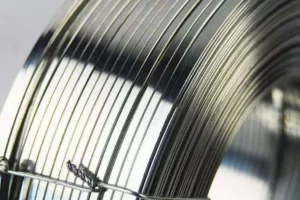
3. Wire Drawing Machine with Roller Dies: Diameter Reduction + Flattening
Wire drawing machines are traditionally used to reduce round wire diameter, but when equipped with roller dies (instead of standard single-hole dies), they can efficiently produce flat wire. This machine is ideal for manufacturers who need both diameter reduction and flattening in one step.
Core Function & Working Principle
- Process: Raw round wire is pulled through a series of roller dies (4–10 rollers per die), which simultaneously reduce diameter and reshape the wire into flat/rectangular profiles. The roller dies’ geometry determines the final cross-section.
- Key Configurations:
- Type: Dry (no lubricant, clean surface) or wet (lubricated, high-speed for thick wire).
- Roller Die Material: Carbide (wear-resistant) or tool steel (cost-effective).
- Machine Models: Flat wire drawing machines, rectangular wire drawing machines, or shaped wire drawing machines (specialized for custom profiles).
CRM Wire Drawing Machine with Roller Dies Highlights
- Tolerance Range: ±0.005–±0.02 mm (suitable for industrial-grade applications).
- Line Speed: Up to 200 m/min (dry drawing) or 300 m/min (wet drawing).
- Material Compatibility: Carbon steel, copper, aluminum, brass, and low-alloy steel.
- Unique Features: Tension control system, inline annealing (optional), and automatic die wear compensation.
Advantages & Limitations
| Advantages | Limitations |
| Combines diameter reduction and flattening (one-step process) | Lower precision than rolling mills/Turks head machines (±0.005 mm minimum) |
| Cost-effective (ideal for small-to-medium production volumes) | Surface quality may require secondary polishing (Ra ≤0.8 μm) |
| Easy to operate and maintain | Not suitable for high-strength alloys (e.g., titanium) or ultra-thin wire (≤0.1 mm) |
| Quick setup for custom profiles (swap roller dies in 30 minutes) |
Typical Applications
- Industrial Fasteners: Flat steel wire for screws, clips, and brackets.
- Furniture: Sofa springs, decorative hardware (consistent thickness, cost-effective).
- Electrical Wiring: Copper flat wire for low-voltage cables (good conductivity).
- General Manufacturing: Low-precision flat wire for non-critical components.
Flat Wire Production Machines: Comparative Table
To simplify your selection, here’s a side-by-side comparison of the three machines:
| Parameter | Flat Wire Rolling Mill | Turks Head Machine | Wire Drawing Machine (Roller Dies) |
| Primary Function | Primary flattening + shaping | Fine-tuning + profile refinement | Diameter reduction + flattening |
| Tolerance Range | ±0.001–±0.01 mm | ±0.0005–±0.005 mm | ±0.005–±0.02 mm |
| Line Speed | Up to 350 m/min | Up to 150 m/min | Up to 300 m/min (wet), 200 m/min (dry) |
| Material Compatibility | Ferrous, non-ferrous, alloys | High-strength metals, alloys | Ferrous, non-ferrous (low-to-medium strength) |
| Surface Quality | Ra ≤0.4 μm (no secondary polishing) | Ra ≤0.2 μm (ultra-smooth) | Ra ≤0.8 μm (may need polishing) |
| Ideal Wire Thickness | 0.01–12 mm | 0.1–10 mm | 0.5–8 mm |
| Production Volume | High (continuous) | Medium-high (inline with rolling mills) | Low-medium (batch or continuous) |
| Cost (Entry-Level) | 50,000–150,000 | 30,000–100,000 | 20,000–80,000 |
| Key Industry | Automotive, PV, electronics | Aerospace, medical | General manufacturing, fasteners |
How to Choose the Right Flat Wire Production Machine
Follow these 5 steps to select the optimal machine for your needs, with insights from Sky Bluer’s engineering team:
Step 1: Define Your Product Specifications
- Profile: Flat, rectangular, square, or custom shape? (Rolling mills = versatile; Turks head = custom refinement; wire drawing = basic flat/rectangular).
- Dimensions: Thickness (0.01 mm = rolling mill; 0.5 mm = wire drawing), width, and tolerance requirements (±0.001 mm = rolling mill/Turks head).
- Surface Quality: Ra ≤0.4 μm (electronics/medical = rolling mill/Turks head; Ra ≤0.8 μm = wire drawing).
Step 2: Analyze Your Raw Material
- Type: Carbon steel, stainless steel, copper, titanium, or alloy? (Rolling mills = all materials; Turks head = high-strength alloys; wire drawing = low-to-medium strength metals).
- Properties: Tensile strength (≥800 N/mm² = rolling mill/Turks head), hardness (HRB >80 = may need pre-annealing), and ductility (brittle metals = avoid wire drawing).
- Input Form: Round wire diameter (pre-drawn wire = all machines; raw wire rod = wire drawing + rolling mill combo).
Step 3: Determine Production Volume & Speed
- High Volume (≥10,000 kg/day): Flat wire rolling mill (continuous multi-pass).
- Medium Volume (1,000–10,000 kg/day): Wire drawing machine (roller dies) + optional Turks head for refinement.
- Low Volume/Custom Batches: Turks head machine (inline with existing rolling equipment) or small-scale rolling mill.
Step 4: Consider Budget & Total Cost of Ownership
- Initial Investment: Wire drawing machine (lowest) → Turks head → rolling mill (highest).
- Operating Costs: Rolling mills (low waste, energy-efficient) vs. wire drawing (higher lubricant costs for wet models).
- Maintenance: Turks head (modular, low maintenance) vs. rolling mill (regular roller replacement for high-volume runs).
Step 5: Verify Compliance & Support
- Industry Standards: IATF 16949 (automotive), AS9100 (aerospace), ISO 13485 (medical) → choose CRM machines (certified compliant).
- After-Sales Support: 24/7 technical support, spare parts availability, and on-site training (Sky Bluer offers 1-year warranty + lifetime maintenance).
Why Choose Sky Bluer CRM Flat Wire Production Machines?
Sky Bluer Environmental Technology Co., Ltd. stands out as a trusted partner for flat wire manufacturers, offering three key advantages:
1. Specialized Solutions for Every Need
- Rolling Mills: Customizable for ultra-thin wire (0.01 mm) or thick structural wire (12 mm), with servo control and laser monitoring.
- Turks Head Machines: CNC-controlled for precision shaping, compatible with existing production lines.
- Wire Drawing Machines: Roller die-equipped models for one-step diameter reduction + flattening, available in dry/wet configurations.
2. Precision & Reliability
- All machines meet ISO 9001 standards, with tolerances as tight as ±0.0005 mm (Turks head) and ±0.001 mm (rolling mill).
- Durable components (carbide rollers, servo motors) ensure 10+ years of service life, reducing downtime.
3. Turnkey Support & Expertise
- Customization: Tailor machine parameters (speed, pressure, roller geometry) to your material and product.
- Technical Consultation: Engineering team analyzes your raw material (diameter, tensile strength, hardness) to recommend the best machine.
- Global Service: On-site installation, operator training, and 24/7 remote support for international clients.
Conclusion
Selecting the right flat wire production machine requires balancing product specifications, material properties, production volume, and budget. Flat wire rolling mills are the versatile workhorse for most applications, Turks head machines excel in precision refinement, and wire drawing machines with roller dies offer cost-effective one-step processing. As a leader in wire processing technology, Sky Bluer’s CRM brand delivers specialized solutions for each machine type—ensuring you get the precision, efficiency, and support needed to stay competitive.
To get a personalized recommendation, share your specific requirements:
- Raw material (type, diameter, tensile strength, hardness)
- Finished product specifications (profile, thickness, width, tolerance)
- Production volume and speed needs
- Industry and compliance requirements (e.g., automotive, medical)
Our engineering team will help you choose the perfect machine or design a turnkey production line tailored to your business.